What is Touch Grass (GRASS) Crypto Coin? Meme vs. DePIN Explained
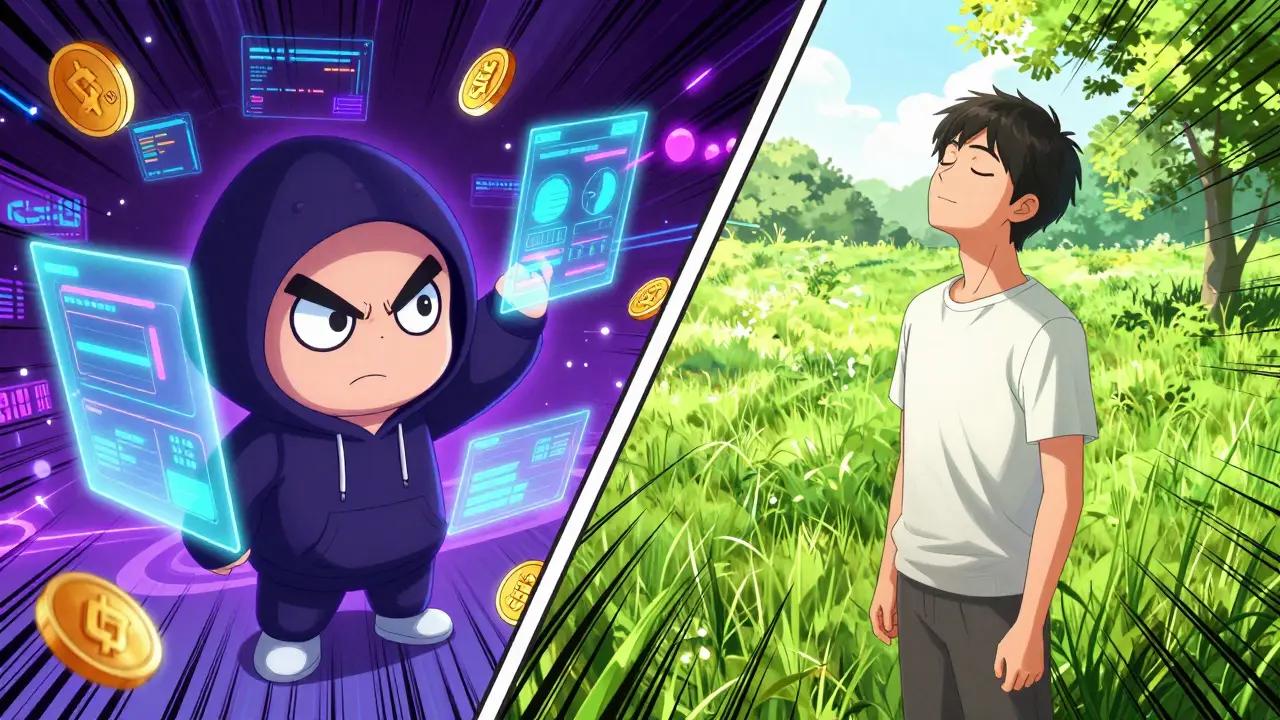
Confusion in the crypto space usually means one of two things: either you’ve found a hidden gem, or you’re about to lose money on a scam. With Touch Grass and its ticker symbol GRASS, it’s definitely the latter scenario if you aren’t careful. The name “Touch Grass” is an internet slang phrase telling someone to go outside and get some fresh air because they are spending too much time online. It’s ironic, funny, and perfect for a meme coin. But here is the catch: there are actually two completely different projects fighting over this name and ticker symbol.
One project is a low-value, speculative meme coin built on the Solana blockchain. The other is a legitimate decentralized infrastructure network called Grass that helps power AI by selling unused internet bandwidth. They both use the ticker GRASS. This overlap has created a mess for traders, investors, and even data tracking platforms like CoinMarketCap. If you clicked this title looking for information on the GRASS token, you need to know exactly which one you are dealing with before you connect your wallet.
The Two Faces of GRASS: Meme vs. Utility
To understand what is happening, we have to split these two entities apart. They share a ticker, but their purposes, technology, and value propositions are worlds apart. Think of it like buying a ticket for a movie named "Titanic." You might expect the classic drama, but if you end up at a parody film, the experience will be very different. In crypto, the difference between utility and memes is often the difference between long-term holding and quick speculation.
| Feature | Touch Grass (Meme) | Grass (DePIN/AI) |
|---|---|---|
| Primary Purpose | Speculation & Internet Culture | Decentralized Bandwidth Sharing |
| Blockchain | Solana | Solana |
| Ticker Symbol | GRASS (often TOUCHGRASS) | GRASS |
| Token Supply | 1 Billion | Distributed via Airdrop (2024) |
| User Activity | Trading only | Running background app |
| Revenue Model | None (Speculative) | Selling bandwidth/data to AI firms |
Project 1: The Touch Grass Meme Coin
Let’s start with the project that literally bears the name “Touch Grass.” This is a classic Solana meme coin. Launched in 2023, it leans heavily into the irony of the internet culture phrase. While the phrase tells people to go outside, this coin celebrates staying inside, watching charts, and ignoring the real world. Its marketing slogan, “Did someone say … cookies?”, highlights that this is purely a community-driven joke token.
From a technical standpoint, there isn’t much to see. It operates on the Solana blockchain, which is popular for meme coins due to low transaction fees and high speed. However, unlike utility tokens, the Touch Grass meme coin has no underlying technology, no product, and no service. Its value is derived entirely from community sentiment and trading volume. As of late 2024, data from trackers like CoinMarketCap showed a market cap hovering around $68,000 with extremely low liquidity. Trading volumes were often near zero, meaning if you tried to sell a large amount, you could crash the price instantly.
This type of asset fits into the broader category of “degen” plays-high-risk, high-reward bets where the goal is to buy early and sell before the hype dies. For the average investor, this offers little security. There is no team building software, no partnerships with major companies, and no roadmap beyond hoping the next viral tweet sends the price up. It is a digital collectible based on a joke, nothing more.
Project 2: Grass (The DePIN Network)
Now, let’s look at the project that causes the most confusion because it shares the GRASS ticker but has actual substance. This project is simply called Grass. It is not a meme. It is a Decentralized Physical Infrastructure Network (DePIN). DePINs are a growing sector in crypto where physical resources-like storage space, computing power, or in this case, internet bandwidth-are shared and monetized through blockchain technology.
Grass allows users to earn tokens by sharing their unused internet bandwidth. Here is how it works in plain English: When you browse the web, your computer downloads data. Much of this data is cached temporarily. Grass provides a browser extension or desktop application that runs in the background. It identifies this non-sensitive, cached data and sells access to it to third parties, primarily Artificial Intelligence (AI) companies that need vast amounts of real-time web data to train their models.
This solves a real problem. AI developers need clean, diverse, and up-to-date data from the open web. Scraping websites directly can be slow, expensive, and sometimes blocked by anti-bot measures. Grass creates a decentralized marketplace where everyday users become nodes in a global network, providing this data efficiently. The Grass Foundation launched its first major token airdrop in October 2024, distributing millions of tokens to over 2 million users who had contributed bandwidth earlier. This event marked the transition from a points-based system to a tradable cryptocurrency.

Why the Confusion Exists
If the two projects are so different, why do they cause such headaches? The root of the issue lies in how cryptocurrency exchanges and data aggregators list tokens. Many platforms rely on ticker symbols as unique identifiers. When the legitimate Grass project gained popularity, the existing meme coin already held the GRASS ticker on some lists. Consequently, new users searching for the high-profile AI-related GRASS token might accidentally find the low-volume meme coin instead.
This isn’t just a minor inconvenience; it’s a financial risk. Imagine researching the innovative AI bandwidth network, reading positive reviews about its potential in the $1.2 billion DePIN sector, and then accidentally buying the meme coin with a $68k market cap. You would be investing in a joke instead of infrastructure. Research firms like K33 Research have explicitly warned about this disarray, noting that the legitimate Grass project has strong fundamentals while the meme counterpart lacks any utility.
To avoid this trap, always check the contract address. On the Solana blockchain, every token has a unique string of characters called a Contract Address (CA). The CA for the meme coin and the CA for the DePIN network are completely different. Never buy a token based solely on its name or ticker symbol. Verify the address on official channels like the project’s verified website or reputable data aggregators like CoinGecko or CoinMarketCap, ensuring you are looking at the correct listing.
How to Participate Safely
If you are interested in the meme aspect, buying the Touch Grass meme coin requires a standard Solana wallet like Phantom or Solflare. You would transfer SOL to a decentralized exchange like Raydium or Jupiter and swap it for the token. Be aware that slippage-the difference between the expected price and the executed price-can be high due to low liquidity. Only invest what you are willing to lose entirely, as meme coins can drop to zero overnight.
If you are interested in the utility side, participating in the Grass network is different. You don’t necessarily need to buy the token immediately. Instead, you download the Grass application from their official site. The app runs in the background, monitoring your bandwidth usage. You earn “Grass Points” based on how much data you share and the quality of your connection. These points historically determined your allocation during the airdrop. While the initial airdrop phase has passed, the network continues to operate, and future distributions or staking opportunities may arise. The barrier to entry is low: you need a stable internet connection and a device with at least 2GB of RAM.

Risks and Considerations
Both projects carry distinct risks. The Touch Grass meme coin suffers from extreme volatility and lack of intrinsic value. With only thousands of holders and negligible trading volume, it is susceptible to manipulation. A single large seller can drain the liquidity pool, leaving other holders with worthless tokens. Furthermore, meme coins often fade away as cultural trends shift. What is funny today may be irrelevant tomorrow.
The legitimate Grass project faces different challenges. As a DePIN, its success depends on sustained demand for its data services. If AI companies stop using the network or if regulations change regarding data privacy, the revenue model could falter. Additionally, the initial airdrop distribution led to concerns about token emissions. If too many tokens are released into the market at once, it can create selling pressure, driving down the price regardless of the project’s utility. Users should also consider privacy implications. Although Grass claims to only share non-sensitive, cached data, running third-party applications that monitor network traffic always carries some level of trust risk. Always review the privacy policy and ensure you are downloading the app only from official sources.
Conclusion: Know What You Are Buying
The crypto market is filled with clever names and overlapping tickers. The story of Touch Grass versus Grass is a perfect example of why due diligence matters. One is a fun, risky bet on internet humor. The other is a serious attempt to decentralize data infrastructure for the AI age. They are not interchangeable. Before you execute any trade, take a moment to verify the contract address, read the whitepaper, and understand the underlying technology. Don’t let a confusing ticker symbol cost you your capital. Do your homework, stay skeptical, and remember: in crypto, if it sounds too good to be true-or too confusing to understand-it probably needs more scrutiny.
Is Touch Grass (GRASS) a scam?
Not necessarily a scam in the traditional sense of stealing funds, but the meme coin version is highly speculative and lacks utility. The confusion with the legitimate Grass DePIN project can lead to accidental purchases of the wrong asset. Always verify the contract address to ensure you are interacting with the intended project.
How do I distinguish between the two GRASS tokens?
Check the contract address (CA) on the blockchain explorer. The meme coin and the DePIN network have different CAs. Also, look at the project description: the meme coin focuses on humor and trading, while the DePIN project focuses on bandwidth sharing and AI data infrastructure.
Can I still earn Grass tokens by sharing bandwidth?
The initial airdrop for early contributors occurred in October 2024. However, the Grass network continues to operate. Future rewards may come through staking, ongoing participation incentives, or secondary airdrops announced by the Grass Foundation. Check their official Discord and website for the latest updates.
Which blockchain is GRASS built on?
Both the Touch Grass meme coin and the Grass DePIN network are built on the Solana blockchain. This allows for fast transactions and low fees, which is beneficial for both high-frequency trading of memes and micro-transactions for bandwidth payments.
Is it safe to run the Grass application?
Grass states that it only accesses non-sensitive, cached data and does not view personal information like passwords or banking details. However, as with any software that monitors network traffic, there is a inherent trust factor. Use strong passwords, keep your firewall updated, and only download the app from the official grass.io website.