What is Witch Token (WITCH) crypto coin? Tokenomics, price, and metaverse use case explained
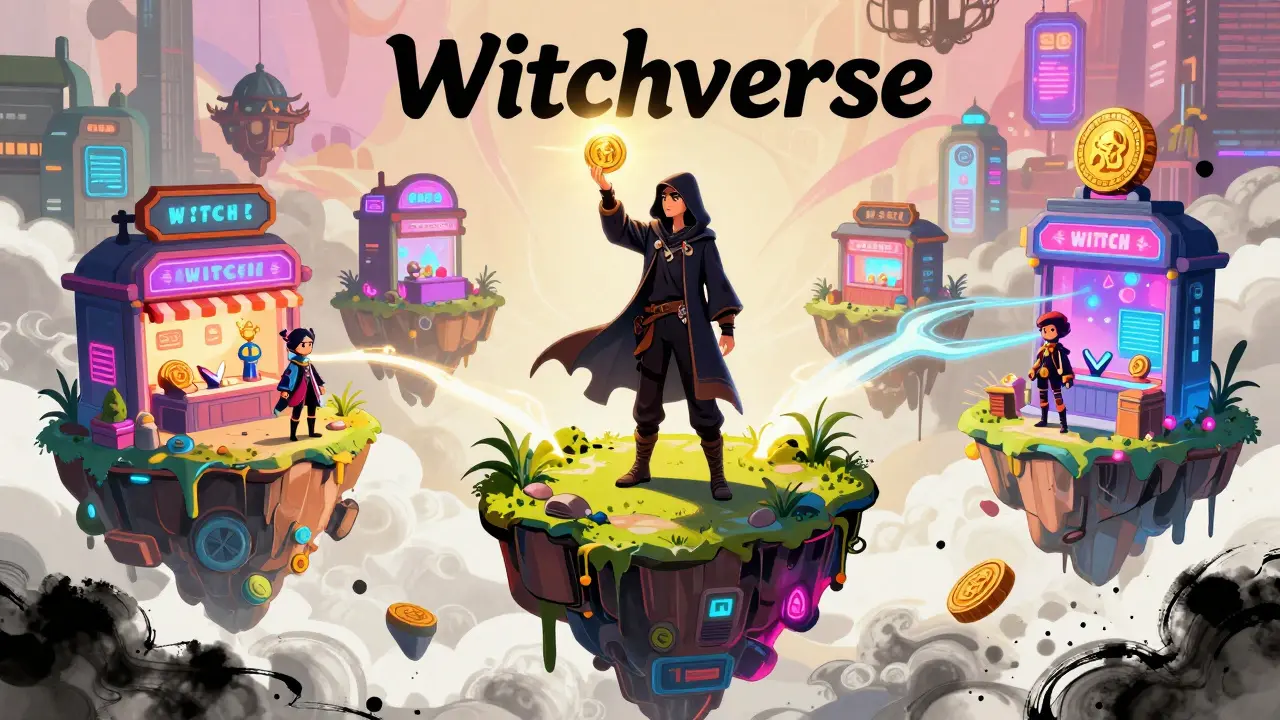
Witch Token (WITCH) isn't just another crypto coin floating around in the market. It's tied to something real - a Web3 metaverse called the Witchverse. If you've ever wondered what happens when gaming, social media, and blockchain collide, WITCH is one of the few tokens trying to build that world from the ground up. But is it just hype, or does it have real utility? Let's break it down.
What is Witch Token (WITCH)?
Witch Token is the native currency of the Witchverse - a 3D digital universe where users can create, buy, sell, and explore virtual spaces. Think of it like Second Life, but built on blockchain. Instead of just playing games, you can design your own apartment, host events, or even open a virtual store. Every action inside the Witchverse - from buying a digital dress to renting out your virtual land - uses WITCH tokens.
This isn’t a coin you hold just to wait for it to pump. WITCH gives you access. You need it to pay for services, vote on platform upgrades, and earn rewards for contributing content. Without WITCH, you’re just a visitor. With it, you’re a participant.
Tokenomics: How many WITCH tokens exist?
Witch Token has a fixed supply of 100 million tokens. That’s it. No more will ever be created. This is different from coins like Bitcoin, where new coins are mined over time. Here, the total number was set from day one.
As of February 2026, not all 100 million are in circulation. Different sources report different numbers:
- CoinGecko says 39 million WITCH are circulating.
- Coinbase reports only 27.3 million are out.
Why the difference? Because some tokens are locked in staking, reserved for team members, or held in development wallets. The actual number of tokens you can buy on exchanges is lower than the total supply.
The contract address for WITCH on Ethereum-compatible chains is 0xdc524e3c6910257744c1f93cf15e9f472b5bd236. You can add this to MetaMask to track your holdings or trade directly on decentralized exchanges.
Price history: Where has WITCH been - and where is it now?
Witch Token had its moment. Back in July 2021, it hit an all-time high of $1.86. That was during the big metaverse boom, when everyone was talking about virtual real estate and NFTs.
Since then? It’s been a long fall. By January 2025, it dropped to a low of $0.008894. That’s a 99.5% crash from its peak.
As of late February 2026, prices are hovering around $0.06 to $0.07:
- CoinGecko: $0.0640
- Coinbase: $0.0640
- Kraken: $0.071
That’s still down 96% from its all-time high. The 7-day price range has been tight - between $0.059 and $0.068 - showing little volatility. That doesn’t mean it’s dead. It means it’s stable. Or stuck. Depends on who you ask.
Market cap and trading volume: Is anyone still trading WITCH?
Market cap is calculated by multiplying the current price by the circulating supply. Because different exchanges report different numbers of circulating tokens, market cap numbers vary:
- CoinGecko: $2.45 million
- Coinbase: $887,569
- LBank: $1.18 million
That puts WITCH around #2700-#3700 on market cap rankings - barely on the map compared to Bitcoin or Ethereum. It has 0% market dominance. In other words, it’s a tiny speck in the crypto universe.
Trading volume is low. On CoinGecko, 24-hour volume was $28,483. On Coinbase, it was $6,000. That’s not enough to move the needle. Most of the trading happens on smaller exchanges like MEXC and LBank. Kraken, Crypto.com, and Binance don’t list it anymore - or never did.
Where can you buy Witch Token?
You can trade WITCH on a handful of exchanges:
- Coinbase
- Kraken
- MEXC
- LBank
- BitMart
But here’s the catch: Crypto.com says it’s not tradable there. Binance doesn’t list it. And Coinbase only lets you buy it through its app - not on its full trading platform.
If you want to buy WITCH, you’ll likely need to use a decentralized exchange (DEX) like Uniswap or SushiSwap. To do that, you’ll need to import the contract address into your MetaMask wallet. It’s not beginner-friendly. You need to know what you’re doing.
What’s the Witchverse actually like?
Here’s the real question: Is Witchverse worth anything? Is it just a website with fancy graphics, or is it alive?
From what’s publicly available, Witchverse lets users:
- Build 3D environments using drag-and-drop tools
- Own and rent virtual land as NFTs
- Host concerts, art shows, or meetups inside the world
- Get paid in WITCH for creating popular content
- Use the token to vote on future upgrades
But here’s the problem: There’s no clear data on how many people actually use it. No user count. No active wallet stats. No screenshots of real events happening inside. The project doesn’t show videos of users interacting. No testimonials. No YouTube walkthroughs.
Compare that to Decentraland or The Sandbox - both have thousands of active users, live events, and even partnerships with brands like Samsung and Adidas. Witchverse has none of that.
Is Witch Token a good investment?
Let’s be blunt: If you’re looking for a crypto to hold for 5 years and get rich, WITCH isn’t it. The market is tiny. The team is invisible. The roadmap is vague. There’s no audit report. No whitepaper breakdown. No GitHub activity.
But if you’re into experimental Web3 worlds - and you believe in the idea of user-owned virtual spaces - then WITCH might be worth a small gamble. Put in $50. See if the Witchverse grows. If it does, you’re early. If it doesn’t? You lose $50. That’s it.
Don’t invest money you can’t afford to lose. Don’t buy because you saw a tweet. Buy only if you’ve tried the platform, understand how it works, and think the idea has legs.
What’s missing from the story?
Here’s what we don’t know:
- Who’s behind the project? No team page. No LinkedIn profiles.
- Is the code open source? No public GitHub repository.
- Has the smart contract been audited? No public audit report.
- Are there partnerships? None announced.
- What’s the roadmap for 2026? No clear plan.
Without these, WITCH feels like a ghost town with a token attached. The price might bounce. It might even hit $0.10 again. But without real users, real activity, and real transparency, it’s hard to call it a project - more like a speculative bet.
Is Witch Token (WITCH) a scam?
Witch Token isn’t officially labeled a scam, but it’s also not a proven project. There’s no team, no audit, and no clear roadmap. That doesn’t mean it’s fraudulent - but it does mean it’s extremely risky. If you’re buying WITCH, treat it like a lottery ticket, not an investment.
Can I use WITCH on MetaMask?
Yes. You can add WITCH to MetaMask by importing the contract address: 0xdc524e3c6910257744c1f93cf15e9f472b5bd236. Once added, you can view your balance and trade it on decentralized exchanges like Uniswap or SushiSwap.
Where is Witch Token traded?
Witch Token is listed on Coinbase, Kraken, MEXC, LBank, and BitMart. It’s not available on Binance or Crypto.com. Trading volume is low, so prices can vary significantly between exchanges.
What’s the difference between circulating supply and max supply for WITCH?
Max supply is the total number of WITCH tokens ever created: 100 million. Circulating supply is how many are currently available to trade - around 27-39 million. The rest are locked in team wallets, staking pools, or future releases. Only the circulating supply affects market cap.
Is Witchverse the same as Decentraland or The Sandbox?
Witchverse aims to be similar - a 3D metaverse where users create and monetize content. But unlike Decentraland or The Sandbox, Witchverse has no public user data, no brand partnerships, and no media coverage. It’s far less developed and less visible. Think of it as a prototype that never launched.
Ryan Burk
March 1, 2026 AT 03:33Tabitha Davis
March 2, 2026 AT 19:06Sriharsha Majety
March 3, 2026 AT 14:32Jeremy buttoncollector
March 5, 2026 AT 11:05Elizabeth Smith
March 6, 2026 AT 06:33Nadia Shalaby
March 7, 2026 AT 12:26Neeti Sharma
March 8, 2026 AT 04:20Daisy Boliaan
March 8, 2026 AT 23:25Vishakha Singh
March 10, 2026 AT 08:45Nicki Casey
March 11, 2026 AT 13:00Jessica Carvajal montiel
March 11, 2026 AT 14:53Michelle Xu
March 12, 2026 AT 23:27Don B.
March 13, 2026 AT 08:05Robert Kromberg
March 14, 2026 AT 03:19Cameron Pearce Macfarlane
March 15, 2026 AT 14:03