Wyoming Crypto-Friendly Laws for Blockchain Businesses

When it comes to starting a blockchain business in the U.S., most states feel like a maze of red tape. Federal agencies like the SEC and CFTC are still figuring out how to regulate crypto, and banks often refuse to work with digital asset companies. But in Wyoming, the rules are clear, the path is open, and the state is actively building infrastructure for Web3. It’s not hype - it’s law.
Why Wyoming? The Delaware of Digital Asset Law
Wyoming isn’t big. With just 580,000 people, it’s the least populous state in the country. But it’s become the most important place in America for blockchain companies. Since 2018, it’s passed over a dozen laws specifically designed to make it easier to operate crypto businesses. No other state has come close to matching its depth of legal clarity. That’s why it’s called the "Delaware of Digital Asset Law" - a reference to Delaware’s historic role as the go-to state for corporate incorporation.Wyoming doesn’t just tolerate crypto. It builds legal structures around it. That means fewer lawsuits, clearer rules, and faster licensing. For founders who’ve spent months trying to get a bank account or navigate ambiguous state money transmitter laws, Wyoming is a breath of fresh air.
The Five Pillars of Wyoming’s Crypto Legal Framework
Wyoming’s approach isn’t random. It’s a coordinated system built on five key laws that cover everything from token classification to banking.- The Virtual Currency Act - This law removes virtual currency transactions from the state’s Money Transmitters Act. That means if you’re just moving Bitcoin or Ethereum around, you don’t need a costly money transmitter license in Wyoming. The state defines "virtual currency" clearly: it’s digital, decentralized, and not issued by the government.
- The Open Blockchain Token Law - This one’s a game-changer for utility tokens. If a token is used to access a service or product (like a gaming item or a decentralized app), and the issuer gives proper notice, it’s exempt from securities laws. This lets startups launch tokens without the legal burden of registering with the SEC.
- The Corporate Blockchain Law - Wyoming lets corporations use blockchain to keep shareholder records, conduct votes, and issue equity. Instead of paper stock certificates, a company can use a private key as proof of ownership. This is huge for DAOs and tokenized companies trying to operate legally.
- The Series LLC Law - Wyoming allows Series LLCs - a structure where one LLC can hold multiple separate cells, each with its own assets and liabilities. For blockchain firms managing different token projects, NFT collections, or DeFi protocols, this means you can isolate risk. If one project fails, the others stay protected. The Secretary of State handles registrations, making it simple to set up.
- The Digital Asset Act - This law defines three types of digital assets: digital consumer assets (like NFTs), virtual currency (like Bitcoin), and digital securities (like tokenized stocks). Crucially, it says digital assets are legally recognized as property. That means they can be owned, transferred, and inherited just like physical assets. Banks in Wyoming can now legally custody these assets under the Wyoming Division of Banking.
Together, these five laws create a complete ecosystem. You can incorporate a company, issue tokens, custody assets, manage shareholders, and protect your business - all under one state’s legal umbrella.
The SPDI Charter: A Crypto Bank That Actually Works
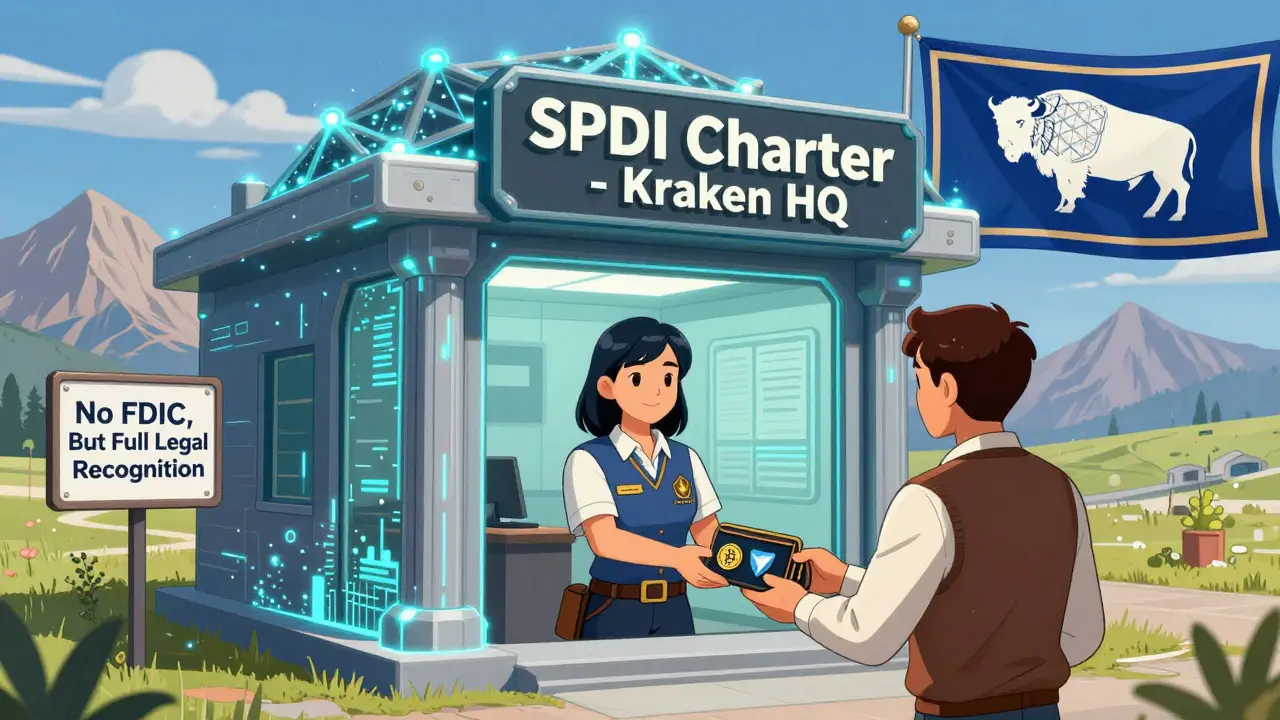
The crown jewel of Wyoming’s legal framework is the Special Purpose Digital Institution (SPDI) charter. This isn’t a buzzword. It’s a real, federally recognized bank charter - but with rules built for crypto.SPDIs can:
- Custody digital assets (like Bitcoin, Ethereum, NFTs)
- Process payments using blockchain networks
- Hold customer deposits in digital form
But they can’t:
- Lend money (no mortgages or personal loans)
- Be FDIC-insured (to avoid systemic risk)
They must hold liquid assets in reserve and maintain contingency funds - but they’re not stuck with the same rules as traditional banks. In September 2020, Kraken became the first crypto exchange to get an SPDI charter. That wasn’t a PR stunt. It was a legal milestone. Kraken could now operate as a bank, with state oversight, federal recognition, and a clear path to compliance.
Today, more than a dozen companies are in the pipeline for SPDI charters. The Wyoming Division of Banking processes applications in months, not years. That’s unheard of elsewhere.
Tax Advantages and Privacy Protections
Wyoming doesn’t have a state income tax. That means no tax on capital gains from crypto trading, mining, or staking. No corporate income tax either. For businesses that make money from digital assets, this is a massive cost saver.Privacy is another big draw. Wyoming doesn’t require companies to disclose beneficial owners to the state. Unlike federal FinCEN rules that demand transparency, Wyoming lets you keep your ownership structure private - as long as you’re not breaking the law. This appeals to investors who want to protect their assets without hiding them.
And unlike California or New York, Wyoming doesn’t force blockchain firms to jump through hoops just to open a bank account. The state’s laws actually help you get banking - not block you from it.
What’s Next? The Wyoming Stable Token (WYST)
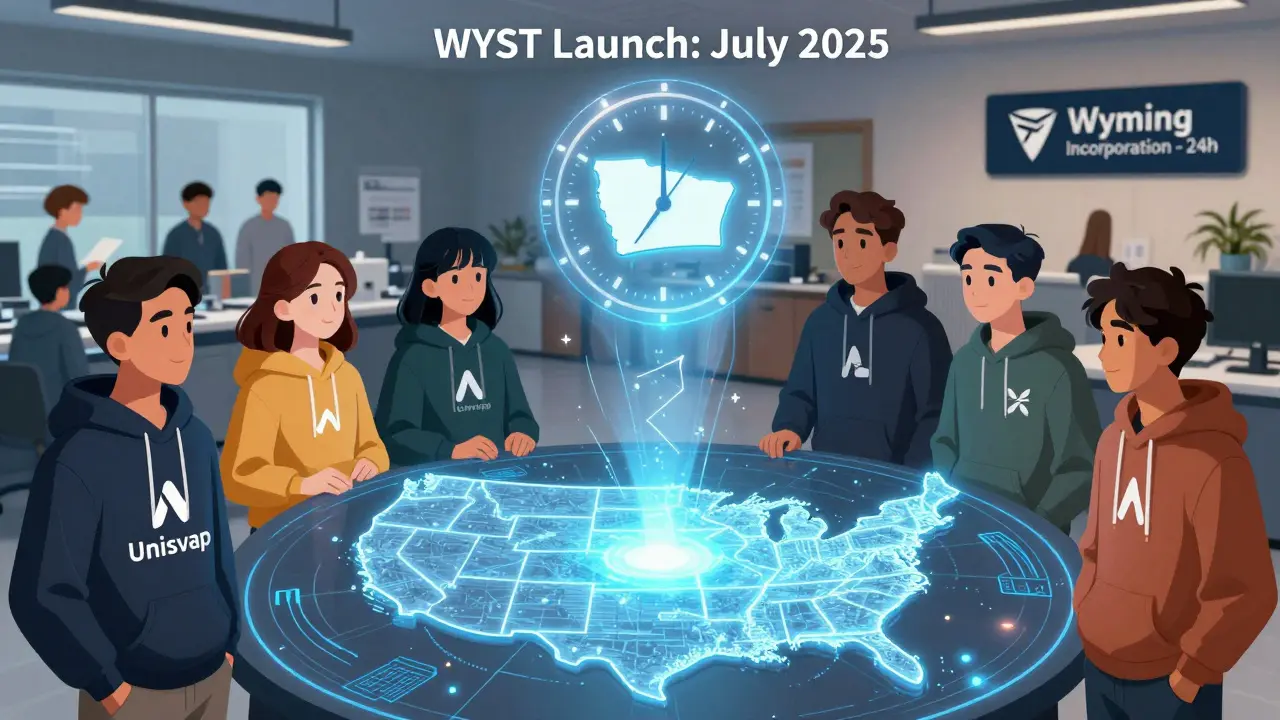
Wyoming isn’t stopping. In 2025, it plans to launch WYST - the Wyoming Stable Token. This will be the first publicly issued state-backed stable token. Think of it like a digital dollar, but issued by the state, not a private company.WYST will be backed 1:1 by U.S. dollars held in reserve. It will be used for government payments, tax collection, and eventually, everyday transactions. This isn’t a fantasy. The Wyoming Stable Token Commission has already drafted the legal and technical framework. Launch is targeted for July 2025.
If WYST works, it could become a model for other states - or even the federal government. But for now, Wyoming is the only place where a state is actively building its own digital currency.
Who’s Using Wyoming’s Laws?
You don’t have to live in Wyoming to take advantage. Many blockchain companies incorporate there while operating remotely. Kraken is the most famous example. Others include:- Alchemy - Uses Wyoming’s corporate blockchain laws to manage tokenized equity
- Uniswap Labs - Has legal teams reviewing Wyoming’s SPDI and token exemption rules
- Chainlink - Has filed for a Series LLC structure in Wyoming to manage its node operators
Even universities are getting involved. The University of Wyoming offers blockchain courses, hosts research labs, and works with lawmakers to draft future legislation. It’s not just a business hub - it’s an ecosystem.
How to Set Up a Blockchain Business in Wyoming
If you’re considering starting a crypto business, here’s how to get started:- Choose your business structure - A Series LLC works best if you’re running multiple projects. A regular LLC is fine for single ventures.
- File with the Wyoming Secretary of State - Online filing takes less than 24 hours. Cost: $100.
- Apply for an SPDI charter - If you need to custody assets or offer payment services, apply through the Wyoming Division of Banking. Expect 3-6 months for approval.
- Get a Wyoming business address - You can use a registered agent service. You don’t need to move there.
- Set up a Wyoming bank account - Use a bank that accepts SPDI charters. First Interstate Bank and First National Bank of Wyoming are two options.
Most startups complete this process in under 90 days. In other states? It can take over a year.
What Wyoming Doesn’t Do
Wyoming isn’t a crypto free-for-all. It still requires:- Compliance with federal anti-money laundering (AML) laws
- Know Your Customer (KYC) checks for customers
- Reporting to the Financial Crimes Enforcement Network (FinCEN)
- Adherence to federal securities laws if you’re selling digital securities
The state doesn’t ignore federal rules - it works within them. That’s what makes it credible.
Why Other States Are Watching
Texas, Florida, and Ohio have tried to copy Wyoming’s laws. But none have matched the scope. Texas passed a token law - but didn’t fix banking. Florida tried to create a crypto sandbox - but left custody rules unclear.Wyoming’s advantage isn’t just the laws. It’s the consistency. Every law connects. The Secretary of State, the Banking Division, and the legislature talk to each other. That coordination is rare.
As federal regulators drag their feet, Wyoming is filling the gap. If you’re building a blockchain business today, you’re not just choosing a state - you’re choosing a legal foundation. And right now, Wyoming is the only one that’s built for the future.
Can I start a blockchain company in Wyoming if I live in another state?
Yes. Wyoming allows out-of-state businesses to incorporate there. You only need a registered agent in the state - no need to relocate. Many blockchain firms use Wyoming for its legal clarity while operating remotely from California, New York, or even abroad.
Do I need to get an SPDI charter to operate a crypto business in Wyoming?
No. The SPDI charter is only required if you want to custody digital assets, hold customer deposits, or offer payment services as a bank. Most token issuers, NFT platforms, and DeFi protocols don’t need it. They can operate under the Virtual Currency Act or Open Blockchain Token Law without a bank charter.
Is Wyoming’s crypto law really better than federal rules?
For now, yes - because federal rules are still unclear. The SEC and CFTC are still arguing over whether tokens are securities or commodities. Wyoming’s laws give businesses certainty today. You can operate legally under state law while waiting for federal guidance. That’s why so many companies are choosing Wyoming as their legal home.
Are there any downsides to incorporating in Wyoming?
The main downside is that you still have to follow federal laws. Wyoming doesn’t protect you from IRS reporting, FinCEN requirements, or SEC enforcement. Also, if you’re trying to raise venture capital, some investors may be unfamiliar with Wyoming’s structure. But for operational freedom and legal clarity, the benefits far outweigh the risks.
What happens if Wyoming changes its crypto laws?
Wyoming’s legislature meets every year, and changes are possible. But the laws are designed to be durable. The SPDI charter, Series LLC, and Digital Asset Act are built into the state’s statutes - not temporary pilot programs. Plus, businesses that incorporated under these laws have legal protections that can’t be easily revoked. Change is slow, and the state has too much at stake to backtrack.
Cameron Pearce Macfarlane
March 2, 2026 AT 00:50Robert Kromberg
March 3, 2026 AT 12:53Robert Conmy
March 4, 2026 AT 20:28Lilly Markou
March 6, 2026 AT 01:31McKenna Becker
March 7, 2026 AT 12:11Amita Pandey
March 8, 2026 AT 03:42Shannon Black
March 8, 2026 AT 12:32Trenton White
March 8, 2026 AT 15:43Kristi Emens
March 9, 2026 AT 16:17Deborah Robinson
March 9, 2026 AT 22:03Sriharsha Majety
March 11, 2026 AT 10:50Tabitha Davis
March 12, 2026 AT 19:50Vishakha Singh
March 13, 2026 AT 09:13Don B.
March 13, 2026 AT 20:13Arya Dev
March 15, 2026 AT 04:12Maggie House
March 15, 2026 AT 20:22Dana Sikand
March 17, 2026 AT 13:54