Benefits of Token Burning in Cryptocurrency
When you hear about a cryptocurrency project burning tokens, it doesn’t mean they’re throwing money into a fire. It means they’re permanently removing coins from circulation - and that simple act can have real, measurable effects on value, trust, and long-term sustainability. Token burning isn’t just marketing fluff. It’s a core economic tool used by serious blockchain projects to create scarcity, control inflation, and reward holders. If you’ve ever wondered why projects like Binance or Terra would destroy millions of dollars’ worth of their own tokens, the answer isn’t about sacrifice - it’s about strategy.
How Token Burning Creates Real Value
Think of token burning like reducing the number of tickets to a popular concert. If 100,000 tickets are sold and then 10,000 are pulled off the market, the remaining 90,000 become more valuable - not because the event got better, but because supply shrank while demand stayed the same. That’s exactly how token burning works in crypto.Let’s say a coin has a market cap of $1 billion and 1 million tokens in circulation. Each token is worth $1,000 on paper. If the project burns 100,000 tokens (10% of supply), the same $1 billion market cap now divides across 900,000 tokens. That pushes the value of each token to roughly $1,111. That’s an 11.1% increase - purely from supply reduction.
Of course, markets don’t always react this cleanly. Price depends on demand, sentiment, and project fundamentals. But when a project burns tokens consistently, it sends a signal: token burning is part of the plan. Investors start factoring in future supply cuts, which can create steady upward pressure on price over time.
Real-World Examples That Worked
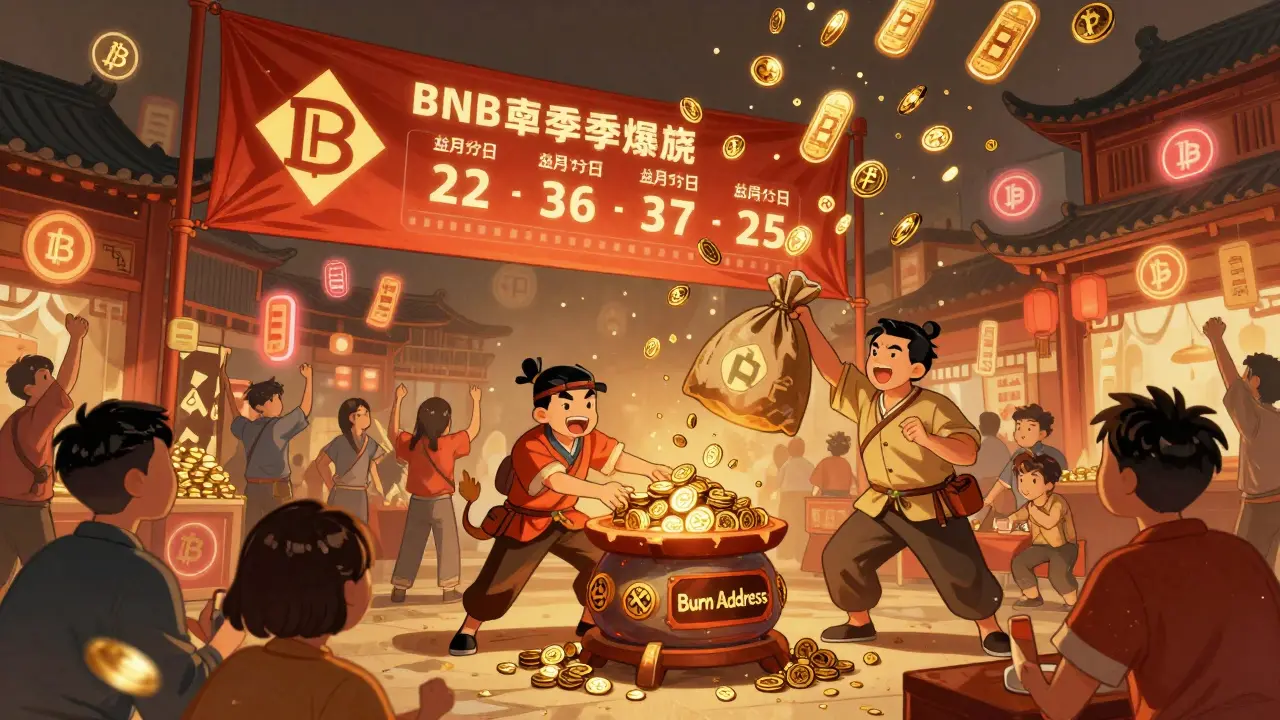
Some of the biggest names in crypto don’t just talk about burning - they do it regularly.Binance Coin (BNB) burns 10% of its quarterly profits in a predictable, automated schedule. Since 2017, BNB has burned over 50 million tokens, reducing its total supply from 200 million to just under 150 million. That consistent reduction helped BNB climb from under $1 to over $300 at its peak - not because of hype alone, but because supply kept shrinking while demand grew.
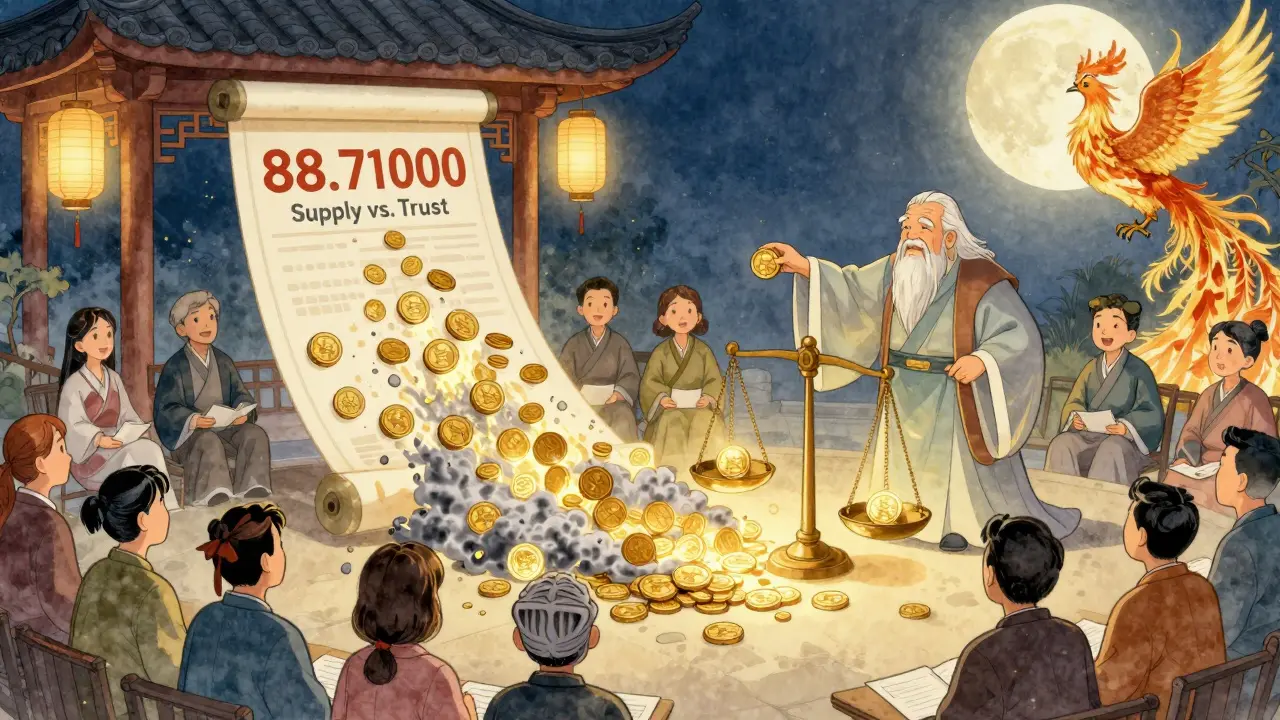
Then there’s Terra’s LUNA burn in November 2021. The community voted to destroy 88.7 million LUNA tokens - worth $4.5 billion at the time. That wasn’t just a big number; it was a statement. Within days, LUNA hit a new all-time high. The market reacted because it saw a project willing to destroy value to protect the long-term health of its ecosystem.
Stellar (XLM) did something even more dramatic in 2019: it burned 55 billion tokens, wiping out over 95% of its total supply. That move wasn’t about panic - it was about resetting the token’s economics to make it more scarce and valuable. The result? XLM’s price stabilized and regained investor confidence over the next year.
Stopping Inflation Before It Starts
Many cryptocurrencies mint new tokens over time - whether through mining rewards, staking payouts, or team allocations. That’s inflation. And inflation eats away at value.Token burning is the counterweight. Projects use three main methods:
- Transaction burns: A small percentage of every transaction is automatically burned. This happens on chains like SHIB and BNB.
- Scheduled burns: Binance’s quarterly burns are the classic example - predictable, transparent, and repeatable.
- Buyback and burn: The project uses its revenue to buy tokens on the open market and then destroys them. This turns profits directly into value for holders.
Algorithmic stablecoins like the old TerraUSD (UST) used burning constantly to maintain their $1 peg. When UST traded below $1, the system burned UST and minted LUNA to restore balance. It wasn’t perfect - but it showed how burning can be used for real-time economic control.
More Value for Stakers and Validators
If you stake your tokens to help secure a blockchain, you earn rewards. But if the total supply of tokens shrinks, those rewards become more valuable.Imagine you stake 1,000 tokens and earn 5% annually - 50 tokens. If the total supply drops by 20% due to burns, those 50 tokens now represent a larger share of the overall ecosystem. In dollar terms, your reward might be worth 15-20% more than before, even if the percentage payout stays the same.
This creates a powerful feedback loop: burns increase token value → higher staking rewards attract more participants → more security and decentralization → stronger network → higher demand for the token. It’s a self-reinforcing cycle that benefits everyone who holds and stakes.
Trust Through Transparency
In crypto, trust is hard to earn. Projects raise millions, then dump tokens on the market. Or they promise “deflationary” models but never follow through.Token burning fixes that. Every burn is recorded on the blockchain. You can see the exact wallet address where tokens are sent - and it’s a dead end. No one can recover them. No CEO can reverse it. No loophole exists.
This transparency builds real confidence. When a project burns tokens, it’s saying: “We’re not trying to pump and dump. We’re building something that lasts.” That message resonates. It turns speculative traders into long-term holders. It attracts institutional investors who need to see real economic discipline.
Why Burning Beats Corporate Buybacks
In traditional finance, companies buy back their own shares to boost stock prices. But those shares can be reissued later. Executives can sell them. The company can change its mind.Crypto burns don’t work that way. Once a token is sent to a burn address - like 0x0000…dead - it’s gone forever. The private key doesn’t exist. No one controls it. It’s mathematically impossible to recover those tokens.
This permanence makes burning far more credible than any corporate buyback. Investors know what they’re getting: real scarcity. No tricks. No fine print.
Positioning Tokens as Digital Gold
Bitcoin’s value comes from its fixed supply of 21 million. That’s scarcity built into code. Token burning lets other cryptocurrencies mimic that.Projects that burn tokens regularly are saying: “We’re not like the dollar. We’re not like Ethereum’s inflationary issuance. We’re designed to hold value over time.”
This positioning turns tokens from speculative assets into potential stores of value - like digital gold. In times of high inflation, people look for assets that won’t lose purchasing power. Token burns give them a reason to believe a cryptocurrency might be one of those assets.
Community Power, Not Just Corporate Control
Some of the most powerful burns aren’t decided by CEOs. They’re voted on by token holders.The Terra LUNA burn was approved by over 99% of voters in a governance proposal. That meant the decision came from the community, not a boardroom. It wasn’t a top-down move - it was a collective one.
This democratic approach makes burns feel fair. Holders aren’t just passive recipients of value - they’re active participants in shaping the token’s future. That builds deeper loyalty and stronger community alignment.
The Future of Token Burning
Token burning is no longer a gimmick. It’s becoming standard practice. New projects launch with burning mechanisms baked into their tokenomics from day one.Some are even tying burns to real usage: for every 10,000 NFTs sold, 1% of revenue goes to buy and burn tokens. Others link burns to protocol revenue - like Uniswap’s fee distribution model.
As crypto matures, we’ll see more sophisticated burns: automated, event-triggered, and tied to measurable outcomes. The goal isn’t just to reduce supply - it’s to align supply reduction with real economic activity.
Projects that ignore burning risk being left behind. In a crowded market, the ones that prove they care about long-term value - not just quick cash grabs - will win.
Is token burning good for investors?
Yes, when done correctly. Token burning reduces supply, which can increase the value of remaining tokens. It also signals that a project is serious about long-term value creation. But burning alone won’t save a weak project. Always check the team, use case, and adoption - not just the burn schedule.
Can burned tokens come back?
No. Burned tokens are sent to a burn address - a wallet with no private key. That means no one can access or send those tokens again. The destruction is permanent and verifiable on the blockchain. This is one of the biggest advantages over traditional stock buybacks.
Does token burning guarantee higher prices?
Not always. Price depends on demand, market sentiment, and project fundamentals. A burn might cause a short-term spike, but if the project has no real users or utility, the price will drop again. Burning helps - but it’s not magic. It works best when paired with strong adoption and clear value.
Which cryptocurrencies burn tokens regularly?
Binance Coin (BNB) burns quarterly using a portion of its profits. Shiba Inu (SHIB) burns tokens from every transaction. Ethereum burns ETH from transaction fees via EIP-1559. Solana, Polygon, and Cosmos also have burning mechanisms. Even newer projects like Arbitrum and Optimism use burns to control supply.
Why do some people criticize token burning?
Some argue it’s a distraction - a way to make a weak project look good. Others say burning doesn’t create value; it just redistributes it. And if a project burns too much too fast, it can hurt liquidity or make trading harder. The key is balance: burns should be sustainable, transparent, and tied to real economic activity.