Bitazza Crypto Exchange Review: Is It Safe for Thai Traders in 2026?

Buying Bitcoin or Ethereum in Southeast Asia isn't just about finding a platform with low fees. It's about navigating strict local laws and ensuring your money doesn't get stuck in limbo. If you are based in Thailand, Bitazza is likely one of the first names that popped up in your search results. Established in 2018 and regulated by the Securities and Exchange Commission of Thailand (Thai SEC), it positions itself as a secure, compliant alternative to global giants like Binance or Coinbase. But does the regulatory badge translate to a smooth trading experience, or does it come with hidden costs and technical headaches?
I’ve spent time digging into the numbers, reading user complaints from Reddit and Trustpilot, and testing the interface to see if Bitazza lives up to its promise of being a premier digital asset management platform. The short answer? It’s a solid choice for Thai residents who prioritize legal compliance and THB liquidity, but it has significant flaws that could frustrate international traders or those looking for advanced features.
Key Takeaways
- Regulatory Status: Bitazza is fully licensed by the Thai SEC, offering peace of mind for users concerned about government crackdowns on unregulated exchanges.
- Fees: Standard trading fees are 0.15% for makers and 0.25% for takers, which is competitive, but fiat deposits/withdrawals have a high $30,000 minimum threshold.
- Asset Selection: Supports over 90 cryptocurrencies including BTC, ETH, SOL, and XRP, but lags behind global competitors in variety.
- Safety Concerns: While it uses cold storage and 2FA, users report occasional app crashes during KYC verification and slow customer support responses.
- Best For: Thai residents seeking a locally regulated exchange with deep THB pairs; not ideal for international traders or those needing extensive altcoin options.
Who Is Bitazza Actually For?
Before you sign up, let’s clarify the audience. Bitazza isn’t trying to be the next Binance. Its primary focus is the ASEAN market, specifically Thailand. This localization is both its biggest strength and its main limitation.
If you are a Thai resident, Bitazza offers something global exchanges often struggle with: seamless integration with local banking systems and full compliance with the Digital Asset Act. You can trade against the Thai Baht (THB) directly, which saves you from double conversion fees (USD to THB and vice versa). According to recent data, the platform has seen significant adoption, with over 3 million downloads on mobile devices alone.
However, if you are outside Thailand, you might hit a wall. The platform lacks Tier-1 global regulatory oversight from bodies like the UK’s Financial Conduct Authority (FCA) or Singapore’s Monetary Authority (MAS). More importantly, the fiat services are restricted. Deposits and withdrawals of fiat currency are only available for transactions of $30,000 or higher. This effectively locks out most retail users who want to move small amounts of cash in and out easily. For these users, Bitazza functions primarily as a crypto-to-crypto exchange.
Security and Regulation: The Double-Edged Sword
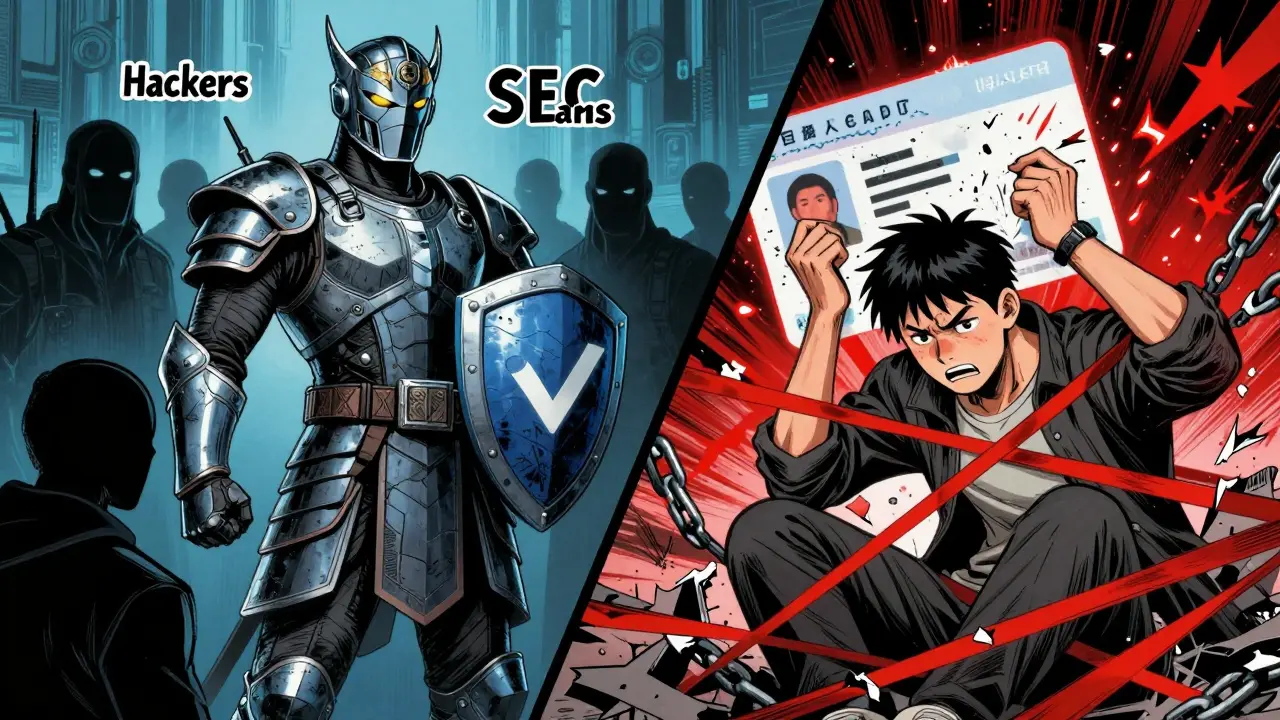
When it comes to crypto, "safe" is a relative term. No exchange is immune to hacks, but regulation provides a layer of accountability. Bitazza holds a license from the Thai SEC. This means they undergo regular audits and must adhere to strict anti-money laundering (AML) and know-your-customer (KYC) protocols.
| Feature | Bitazza Implementation | Industry Standard |
|---|---|---|
| Regulatory Oversight | Thai SEC Licensed | Varies (FCA, MAS, etc.) |
| Custody | Cold Storage + Third-party Custodians | Cold Storage (Standard) |
| Authentication | Mandatory 2FA | Optional/Recommended |
| KYC Requirement | Mandatory for all tiers | Often optional for small limits |
The security infrastructure includes two-factor authentication (2FA) and cold storage for the majority of user funds. They also employ third-party custodian solutions to add another layer of protection. However, independent reviews from platforms like TradingFinder and Traders Union note that while Bitazza meets key security protocols, it lacks the multi-jurisdictional regulatory framework that larger global exchanges possess.
There is also some confusion in the industry regarding their status. Some automated verification tools initially flagged Bitazza as unregulated, likely due to delays in updating global databases. Always verify directly through the Thai SEC’s official list of licensed operators. As of early 2025, Bitazza remains in good standing.
Fees and Trading Costs: What Will It Cost You?
Let’s talk money. Hidden fees are the silent killer of crypto profits. Bitazza’s fee structure is straightforward but has caveats.
- Trading Fees: Makers pay 0.15%, and takers pay 0.25%. This is slightly lower than many major global exchanges, which often start at 0.1% for makers but can go up to 0.5% for takers depending on volume.
- Deposit Fees: Crypto deposits are free. Fiat deposits, however, are tricky. As mentioned, you generally need to move at least $30,000 to use fiat gateways efficiently.
- Withdrawal Limits: Your withdrawal capacity depends on your KYC level. Level 1 users are capped at $90,000 per day. Level 2 jumps to $900,000 daily. Level 3 offers unlimited withdrawals. This tiered system encourages users to complete more extensive identity verification.
- Token Discounts: If you hold the native FDM token, you can slash your trading fees by up to 70%. This is a common strategy among exchanges to boost demand for their proprietary assets.
For high-volume traders, the 0.15% maker fee is attractive. For casual investors moving small amounts of fiat, the $30,000 minimum makes Bitazza impractical. You’d likely be better off using a P2P platform or a different exchange for smaller on-ramps.
User Experience and Mobile App Performance
In crypto, your phone is your bank. Bitazza offers apps for both Android and iOS. On paper, the specs look good: real-time market data, advanced charting, and access to OTC (Over-The-Counter) desks for large transactions.
But user feedback tells a different story. The Google Play Store rating hovers around 3.9 stars, which is average at best. A recurring complaint involves the KYC process. Users report that the app frequently crashes when trying to upload identification documents. One reviewer noted, "They ask me to renew my documents, and it's impossible to do because the app gets crash each time I try to take a photo."
This is a critical pain point. If you can’t verify your identity, you can’t withdraw your money. During peak volatility periods, these technical glitches can lead to panic. Additionally, customer support response times vary widely. Simple queries might get answered in 12-24 hours, but complex issues can take 48+ hours. For an exchange handling millions in assets, this delay is unacceptable for many professional traders.
Asset Diversity and Liquidity
Bitazza supports over 90 cryptocurrencies. This includes the big players: Bitcoin (BTC), Ethereum (ETH), Solana (SOL), Ripple (XRP), and Avalanche (AVAX). It also lists popular DeFi tokens like Uniswap (UNI), Chainlink (LINK), and PancakeSwap (CAKE).
Compared to Bybit or Binance, which offer 500+ assets, Bitazza’s selection is limited. If you are hunting for obscure meme coins or new launchpad projects, you won’t find them here. However, for the core assets that drive 90% of institutional and retail trading, the liquidity is strong, particularly for THB pairs. This depth ensures that you can enter and exit positions without significant slippage, even during volatile market swings.

Pros and Cons Summary
| Pros | Cons |
|---|---|
| ✅ Fully regulated by Thai SEC | ❌ High minimum ($30k) for fiat transactions |
| ✅ Deep liquidity for THB pairs | ❌ Limited cryptocurrency selection (90+) |
| ✅ Competitive trading fees (0.15%/0.25%) | ❌ App stability issues during KYC |
| ✅ Strong local customer support in Thai | ❌ Slow resolution for complex support tickets |
| ✅ Visa card integration for spending | ❌ Not suitable for international non-residents |
Alternatives to Consider
If Bitazza doesn’t fit your needs, what else is out there?
- Bybit: Offers a wider range of assets and advanced trading features like copy trading. It has established a legal entity in Thailand, making it a viable alternative for those wanting more features while staying compliant.
- Satang Pro: Another Thai-regulated exchange. It often has lower barriers to entry for fiat deposits and a simpler interface, though it may lack the liquidity depth of Bitazza for large orders.
- Binance: The global giant. While facing regulatory hurdles in various countries, it remains the king of asset diversity and liquidity. Use with caution regarding local compliance laws.
Final Verdict
Bitazza is not a bad exchange; it’s a specialized one. If you are a Thai resident who values regulatory safety above all else and trades primarily against the Thai Baht, Bitazza is a reliable, secure option. The fees are fair, and the liquidity is solid for major pairs.
However, if you are an international trader, a fan of niche altcoins, or someone who wants to move small amounts of fiat in and out quickly, you will likely find Bitazza frustrating. The $30,000 fiat minimum and occasional app bugs are dealbreakers for many. In 2026, as Thailand’s crypto regulations tighten further, Bitazza’s position as a top-tier domestic exchange should strengthen, but it won’t replace the convenience of global platforms for cross-border users.
Is Bitazza safe for beginners?
Yes, Bitazza is considered safe for beginners due to its regulation by the Thai SEC and mandatory security features like 2FA and cold storage. However, beginners should be cautious of the app's occasional technical glitches during the KYC process. Start with small amounts to familiarize yourself with the interface before committing larger sums.
Can I use Bitazza if I am not a Thai resident?
While you may be able to create an account, Bitazza is optimized for Thai residents. The primary limitation is the fiat gateway, which requires transactions of $30,000 or higher. Additionally, customer support and documentation are primarily in Thai, making it difficult for non-locals to navigate issues.
What is the minimum deposit to start trading on Bitazza?
The minimum deposit to begin trading is 0.001 BTC or approximately $10 in USD/USDT via cryptocurrency transfer. However, if you wish to deposit fiat currency (like THB or USD), the minimum transaction amount is significantly higher, typically $30,000.
How long does KYC verification take on Bitazza?
Standard KYC verification usually takes between 24 to 48 hours. However, user reports indicate that technical issues with the mobile app can delay this process if document uploads fail. Ensure your photos are clear and well-lit to avoid rejection.
Does Bitazza offer a referral program?
Bitazza has offered referral incentives in the past, often tied to their native FDM token. Check their current promotions page for the latest details, as these programs change frequently. Holding FDM tokens can also reduce your trading fees by up to 70%.
Why is my withdrawal limit so low?
Your withdrawal limit is determined by your KYC tier. Level 1 users are capped at $90,000 per day. To increase this limit to $900,000 or unlimited, you must complete additional verification steps to reach Level 2 or Level 3. This is a standard anti-fraud measure.