How NFTs Work on Blockchain: A Simple Guide to Digital Ownership
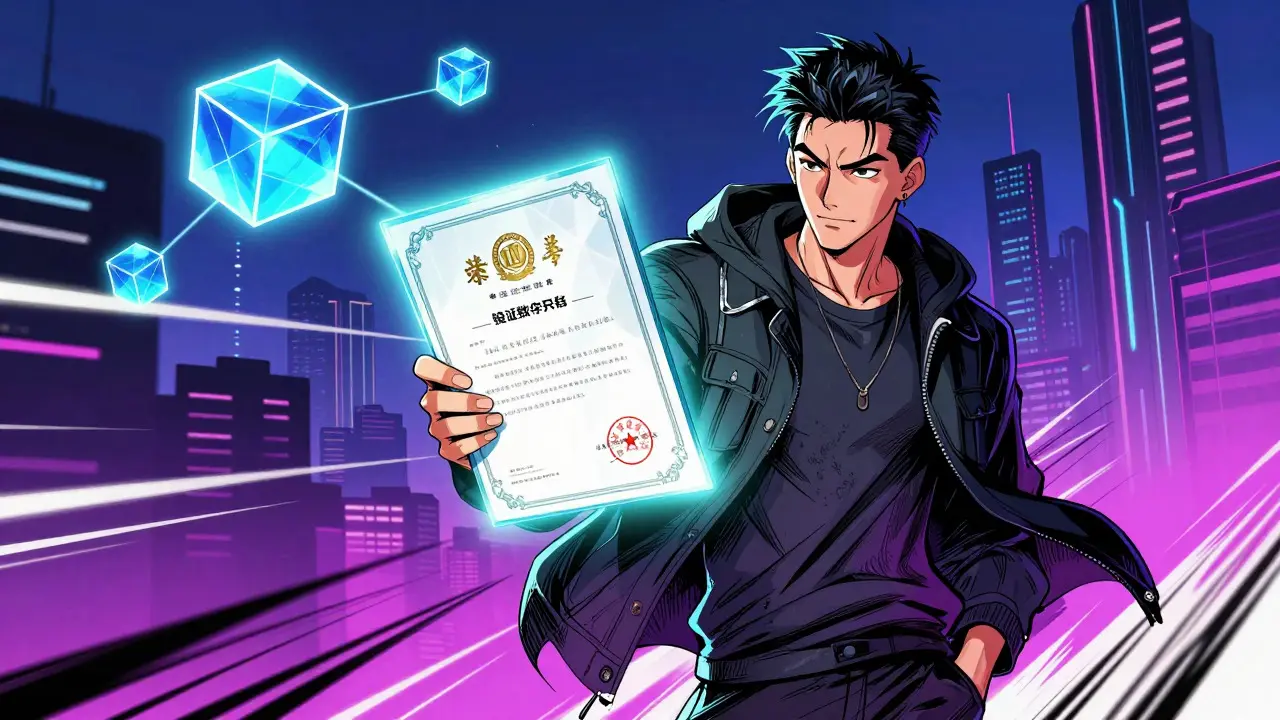
You’ve probably seen headlines about people buying digital pictures for millions of dollars. It sounds crazy, right? But behind the hype lies a piece of technology that is actually changing how we think about ownership. Non-fungible tokens, or NFTs, are unique digital certificates of ownership recorded on a blockchain ledger. They don’t just sit in your wallet; they exist as permanent entries in a decentralized system that anyone can verify but no single person controls.
Think of an NFT like a deed to a house. The house itself (the digital art, music, or video) might be viewable by everyone on the internet, but the deed proves who owns it. This distinction is crucial because it separates the *asset* from the *proof of ownership*. In this guide, we’ll break down exactly how this works, why it matters, and what you need to know before jumping in.
The Core Concept: What Makes an NFT "Non-Fungible"?
To understand NFTs, you first have to understand the word "fungible." Fungible means interchangeable. If I give you a $20 bill and you give me another $20 bill, we’re both happy. The bills are identical in value and function. Bitcoin works the same way-one Bitcoin always equals one Bitcoin.
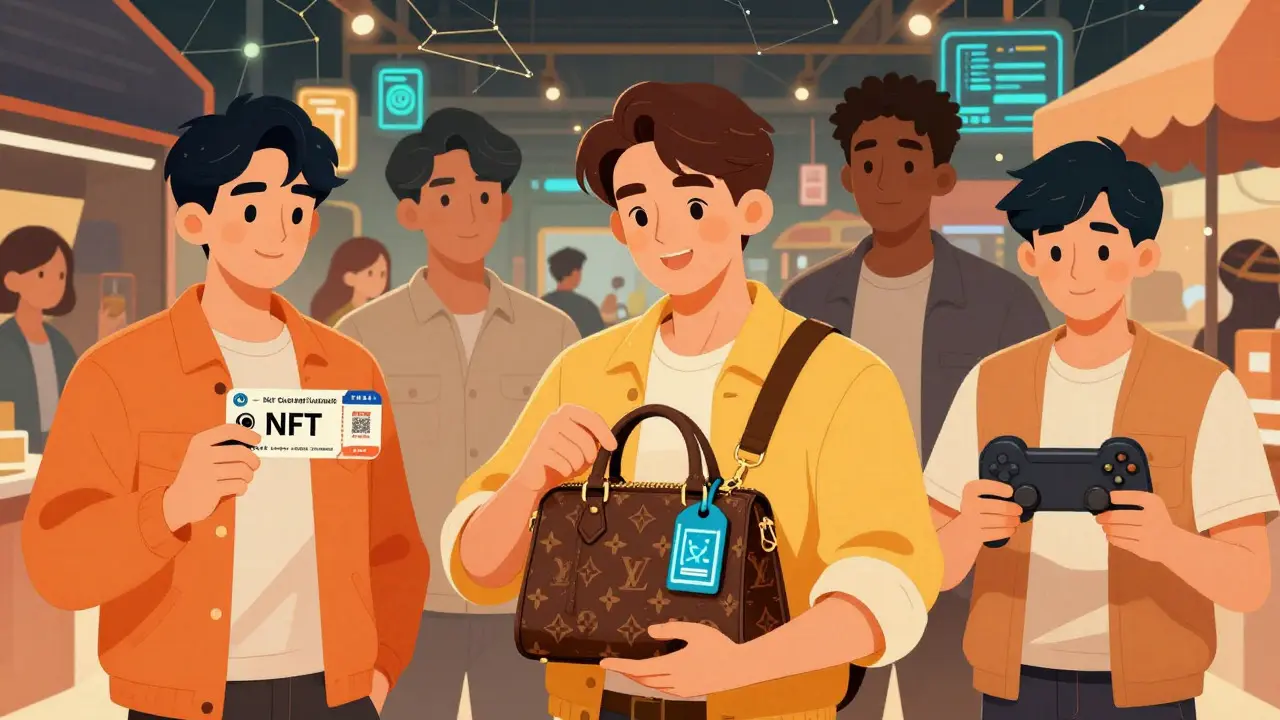
An NFT is different. It is unique. You can’t swap one Bored Ape Yacht Club monkey for another and expect them to be equal in value or identity. Each NFT has a distinct digital signature or identification code embedded in its smart contract. This uniqueness allows it to represent specific items, whether that’s a rare piece of digital art, a ticket to a concert, or even a physical luxury handbag tracked via blockchain.
| Feature | Fungible (e.g., Bitcoin) | Non-Fungible (e.g., Art NFT) |
|---|---|---|
| Interchangeability | Yes, units are identical | No, each unit is unique |
| Value Source | Market supply/demand of currency | Rarity, utility, or creator reputation |
| Divisibility | Highly divisible (satoshis) | Usually indivisible (whole token) |
| Primary Use Case | Currency, store of value | Digital ownership, collectibles, access |
Under the Hood: Standards and Smart Contracts
NFTs aren’t magic; they’re code. Specifically, they rely on standards that tell blockchains how to handle these unique assets. The most famous standard is ERC-721, which is a technical protocol developed in 2017 that defines how non-fungible tokens are created and managed on the Ethereum network. Created by William Entriken and others, ERC-721 ensures that every token has a unique ID number. When you buy an NFT, you’re essentially interacting with a smart contract-a self-executing program-that updates the owner field from the seller’s address to yours.
Later, the ERC-1155 standard was introduced by Enjin in 2018. This is more efficient for games and platforms that issue many types of items. Instead of creating a separate contract for every single sword or shield in a game, ERC-1155 lets one contract manage multiple token types. This can reduce transaction costs by up to 90% during batch operations, making it much cheaper for developers to mint large collections.
While Ethereum hosts about 80% of all NFT transactions, other blockchains are catching up. Solana, for example, uses a different standard called Metaplex. Solana offers near-instant finality and fees around $0.00025 per mint, compared to Ethereum’s higher gas costs. However, Ethereum remains the dominant platform due to its massive ecosystem of marketplaces and tools.
Where Is the Actual File Stored?
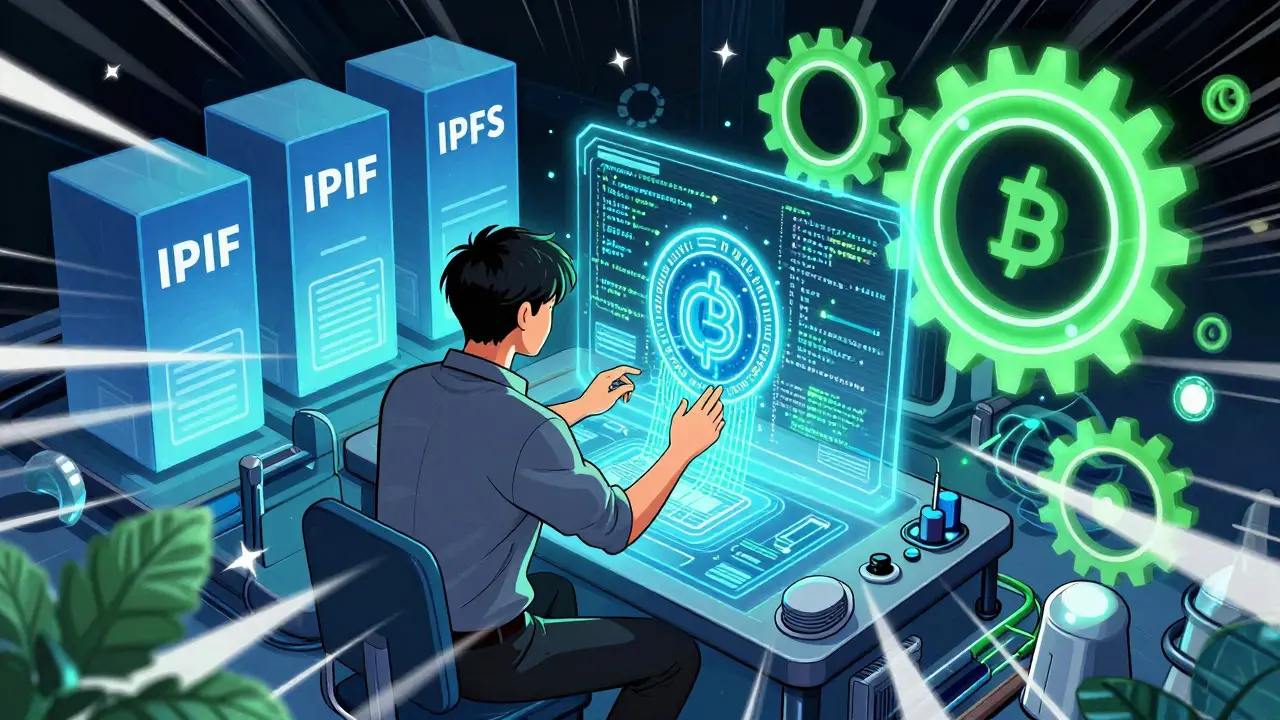
This is the biggest misconception about NFTs. Many people think the image or video file lives on the blockchain. It usually doesn’t. Blockchains are expensive and slow for storing large files. Instead, the NFT contains metadata-a JSON file-that points to where the actual asset is stored.
In the early days (2017-2020), many projects stored these files on centralized servers like Amazon Web Services (AWS). This created a major risk: if the server went down or the company shut down, the link broke. We saw this happen with some CryptoPunks assets becoming inaccessible after server migrations. Today, best practices involve using decentralized storage solutions like IPFS (InterPlanetary File System) or a peer-to-peer hypermedia protocol designed to preserve and grow humanity's knowledge by making networks unbreakable through content-addressed data. Arweave is another popular option that charges a one-time fee for permanent storage.
As of mid-2023, over 60% of new NFTs use some form of decentralized storage. This ensures that even if the original website disappears, the artwork remains accessible to the owner forever. Always check if an NFT project stores its assets on IPFS or Arweave before buying-it’s a sign of long-term viability.
The Minting Process: How an NFT Comes to Life
Minting is the process of creating an NFT on the blockchain. Here’s what happens step-by-step:
- Creation: An artist uploads their file to a storage solution (like IPFS) and gets a unique link (hash).
- Metadata Setup: The artist creates a JSON file containing details like the name, description, and the link to the file.
- Smart Contract Deployment: A developer writes code (usually in Solidity for Ethereum) that defines the rules of the collection, such as total supply and royalty percentages.
- Transaction: The artist sends a transaction to the blockchain, paying a "gas fee" to miners or validators. This records the token permanently.
- Verification: Once confirmed, the NFT appears in the artist’s digital wallet and can be listed on marketplaces like OpenSea or Rarible.
The cost of minting varies wildly. On Ethereum, it can range from $1.20 to over $100 depending on network congestion. On Solana or Polygon, it’s often fractions of a cent. High gas fees on Ethereum have pushed many new creators toward Layer 2 solutions or alternative chains to keep costs manageable.
Why Do People Buy Them? Utility Beyond Art
It’s easy to dismiss NFTs as just expensive JPEGs, but their utility is expanding rapidly. Dr. Cathy Barrera, former Chief Economist at Zeppelin Studios, noted that the real innovation isn’t the token itself, but the automated royalty infrastructure. With smart contracts, creators can earn 5-10% on every secondary sale automatically-something impossible in traditional art markets.
Beyond art, NFTs are being used for:
- Supply Chain Tracking: Companies like Walmart use NFT-like tokens to track high-value items, reducing fraud by 18%.
- Digital Identity: Verifiable credentials for education or professional licenses.
- Gaming Assets: Owning in-game items that you can sell or trade outside the game ecosystem.
- Ticketing: Preventing scalping by tying tickets to specific wallets, as seen with Taylor Swift’s Eras Tour.
IBM’s 2023 research highlighted that 34 Fortune 500 companies are already implementing NFT-based tracking systems. This shift from speculation to utility suggests that NFTs will persist even if the speculative bubble bursts.
Risks and Challenges You Should Know
Like any emerging technology, NFTs come with risks. First, there’s the issue of scams. Rug pulls-where developers abandon a project after collecting funds-are common. According to DappRadar, 41% of new buyers lose money due to scams or poor timing within their first two weeks. Always do your homework: check the team, audit reports, and community engagement.
Second, environmental concerns. While Ethereum switched to Proof-of-Stake in 2022, reducing energy use by 99.95%, older chains still consume significant power. Tezos and Solana offer greener alternatives with minimal carbon footprints.
Finally, regulatory uncertainty. The SEC has classified some NFTs as securities under the Howey Test, meaning they may require compliance with financial regulations. The EU’s MiCA framework treats them differently, offering lighter oversight. Keep an eye on local laws if you’re trading heavily.
Getting Started: A Practical Checklist
If you want to dive into NFTs, here’s how to start safely:
- Choose a Wallet: MetaMask for Ethereum, Phantom for Solana. Never share your seed phrase.
- Buy Crypto: Purchase ETH or SOL from a reputable exchange like Coinbase or Kraken.
- Connect to a Marketplace: Link your wallet to OpenSea, Magic Eden, or Rarible.
- Research Projects: Look for active communities, clear roadmaps, and decentralized storage.
- Start Small: Buy low-cost items to learn the process before investing significant capital.
Remember, only 1.3% of NFT collections maintain value above mint price after 12 months. Treat it as entertainment or investment with caution, not a get-rich-quick scheme.
What happens if I lose my private key?
If you lose your private key or seed phrase, you lose access to your NFTs forever. There is no "forgot password" button in blockchain. Some professional recovery services exist, but success rates are low and fees are high. Always back up your keys securely.
Do I own the copyright to the image?
Not necessarily. Buying an NFT gives you ownership of the token, not automatically the copyright to the underlying asset. Most projects grant personal usage rights, but commercial rights vary. Check the project’s terms of service carefully.
Are NFTs environmentally friendly?
It depends on the blockchain. Ethereum is now very eco-friendly after switching to Proof-of-Stake. Solana and Tezos are also low-energy options. Avoid older Proof-of-Work chains if sustainability is a priority for you.
Can NFTs be copied?
The digital file can be copied, but the proof of ownership cannot. Think of it like printing a poster of the Mona Lisa. Anyone can print it, but only the Louvre owns the original. The value lies in the verified authenticity and scarcity provided by the blockchain.
Which blockchain is best for beginners?
Ethereum has the largest selection of high-value NFTs but higher fees. Solana is faster and cheaper, making it great for learning without risking much capital. Polygon offers Ethereum compatibility with low fees. Start with Solana or Polygon to minimize initial costs.
Alex Di Mango
August 12, 2026 AT 01:18It's actually pretty wild how this tech is evolving from just 'expensive monkey pictures' to actual supply chain tracking. I remember when everyone was mocking it, but now seeing Walmart use similar tokens for fraud reduction makes you rethink the whole narrative. It’s not about the JPEG anymore, it’s about the immutable ledger behind it.
Ed Mitchell
August 13, 2026 AT 20:09The article conveniently omits that these ledgers are controlled by venture capitalists who will rug pull the moment liquidity dries up. They want you to believe in 'decentralization' while they hold all the keys to the kingdom. Wake up sheeple, your 'ownership' is just a database entry on a server owned by Amazon or Google anyway.
Michael Mostyn
August 15, 2026 AT 16:49One must consider the philosophical implications of digital scarcity. If value is derived purely from consensus and verification rather than intrinsic utility, does the asset possess any ontological weight? The ERC-721 standard provides a mechanism for distinction, yet the social contract surrounding that distinction remains fragile and subject to market whimsy.
Erica Johnson
August 15, 2026 AT 23:56You guys are overthinking it lol. Just buy low sell high :P But seriously, if you don't check if it's on IPFS, you're basically buying a link to a dead website. Always check the metadata before dropping cash, trust me on this one.
Ken G
August 17, 2026 AT 21:47morally bankrupt industry built on greed and hype. most people lose money because they are gullible enough to think a picture has value. the environmental cost alone should stop anyone from participating unless they are part of the elite circle profiting off the masses
Marcia Albert
August 18, 2026 AT 12:57I kinda like the idea of owning a piece of digital history, even if it is just a token. There's something poetic about having a permanent record on a decentralized network that no single entity can delete. It feels like leaving a little footprint in the digital ether, vibrant and unchangeable.
Emma Smith
August 20, 2026 AT 04:24the boundary between self and object dissolves here we become the collection we curate the smart contract is merely a mirror reflecting our deepest desires for validation in a void where nothing is real except the hash why do we seek ownership when we own nothing truly?
Amor Jordan
August 22, 2026 AT 00:55This is such an important topic! I feel like so many people are scared to jump in because of the jargon, but breaking it down like this really helps. We need more guides that explain the 'why' instead of just the 'how'. It gives me hope that technology can be used for good things like ticketing and identity verification.
Nick Darring
August 22, 2026 AT 23:37Actually, the whole premise of non-fungibility is flawed because ultimately every token is just code that can be replicated or deprecated by the protocol upgrade, meaning your 'unique' item is only unique until the developers decide to change the rules of the game which they inevitably do because human nature dictates that power corrupts absolutely and thus the entire ecosystem is built on a foundation of sand that will eventually wash away under the tide of regulatory scrutiny and technological obsolescence.
Namrata Mapgaonkar
August 23, 2026 AT 17:46in india we are seeing lots of adoption in gaming sector with nfts its very interesting how different cultures adopt tech differently :) also gas fees on ethereum are still scary for us here so polygon is big hit
Lorraine Surringer
August 25, 2026 AT 03:26Oh honey, please tell me you backed up your seed phrase? Because if you didn't, you might as well have burned that money in a fireplace. It's tragic watching people lose access to their assets because they were too lazy to write down twelve words. Do better for yourself!
Eric Zehr
August 25, 2026 AT 07:37Great breakdown of the technical standards. The shift towards ERC-1155 for gaming is definitely the future due to efficiency. I've seen first-hand how batch operations reduce costs significantly for developers. Keep learning and stay safe out there!
Eden Tadesse
August 25, 2026 AT 21:28thx for the info i always forgot what ipfs stands for now i know