Vietnam Ranks #6 in Global Crypto Adoption Despite Strict Regulations
Vietnam Crypto Remittance Calculator
Remittance Comparison
Calculate how much you could save by using crypto for international money transfers to Vietnam compared to traditional services like Western Union.
Note: Crypto transfers in Vietnam currently incur 3-5% additional conversion fees due to unofficial exchanges. Our calculation shows base savings before these fees. Actual savings may be lower but often still significant compared to traditional services.
Vietnam didn’t just stumble into the top five of global crypto adoption-it fought its way there with one hand tied behind its back. While media outlets keep saying it’s #4 or #5, the Chainalysis 2025 Global Crypto Adoption Index officially places Vietnam at #6, adjusted for population. That’s still higher than Japan, Germany, and Canada. And here’s the twist: the country’s government has made it harder than ever to use crypto legally.
How Vietnam Became a Crypto Powerhouse Against the Odds
Vietnam has about 17 million active crypto users-nearly one in five people. That’s not a fluke. It’s not because the government encouraged it. It’s because people needed a better way to send money, buy things online, and protect their savings from inflation. In 2025, Vietnamese users completed over $100 billion in crypto transactions. Most of that happened on offshore platforms like Binance P2P, Bybit, and OKX-not because they wanted to break the law, but because the law made local options nearly impossible.
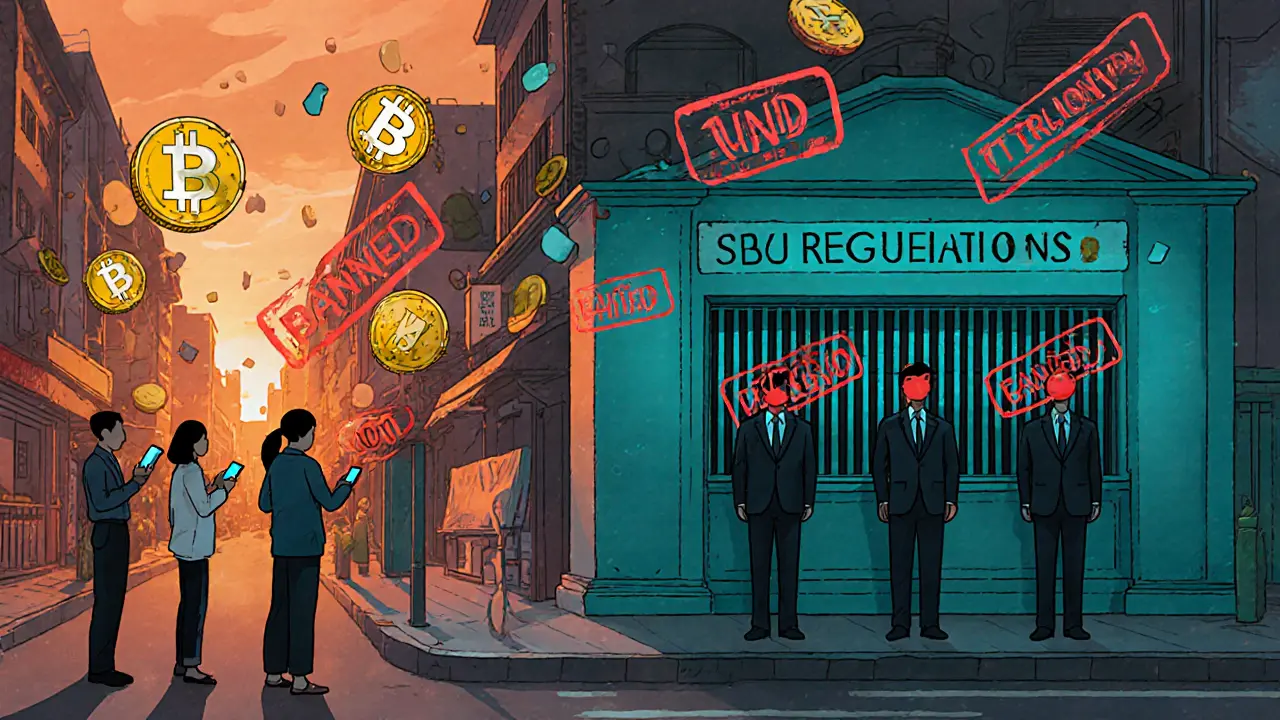
The State Bank of Vietnam (SBV) legalized crypto in June 2025, but with strings attached. You can’t trade crypto for U.S. dollars or any other foreign currency. All trades must be in Vietnamese Dong (VND). You can’t issue stablecoins backed by fiat. You can’t tokenize stocks or bonds. Only Vietnamese companies can issue crypto assets, and only if they’re backed by real, physical goods-like a warehouse of rice or a shipment of electronics. And even then, the company needs at least 10 trillion VND ($379 million USD) in capital just to apply.
That’s not a regulation. That’s a wall.
The Regulatory Sandbox That No One Applied To
In September 2025, the SBV launched a five-year regulatory sandbox to bring crypto trading into the light. The goal? To replace the underground P2P market with licensed, taxed, monitored exchanges. Zero companies applied.
Why? Because the cost and complexity are insane. To get compliant, you need 14 separate certifications from three different ministries: Finance, Public Security, and the State Bank. You need a real-time transaction system that can handle 5,000+ trades per second. The average time to get approved? 11.3 months. The average cost? $2.8 million.
Startups don’t have that kind of money. Even established fintech firms are sitting back. Meanwhile, 92% of Vietnam’s crypto activity still happens outside the system-on unregulated P2P platforms, through informal brokers, and via peer-to-peer Telegram groups.
Why Stablecoins Are the Missing Link
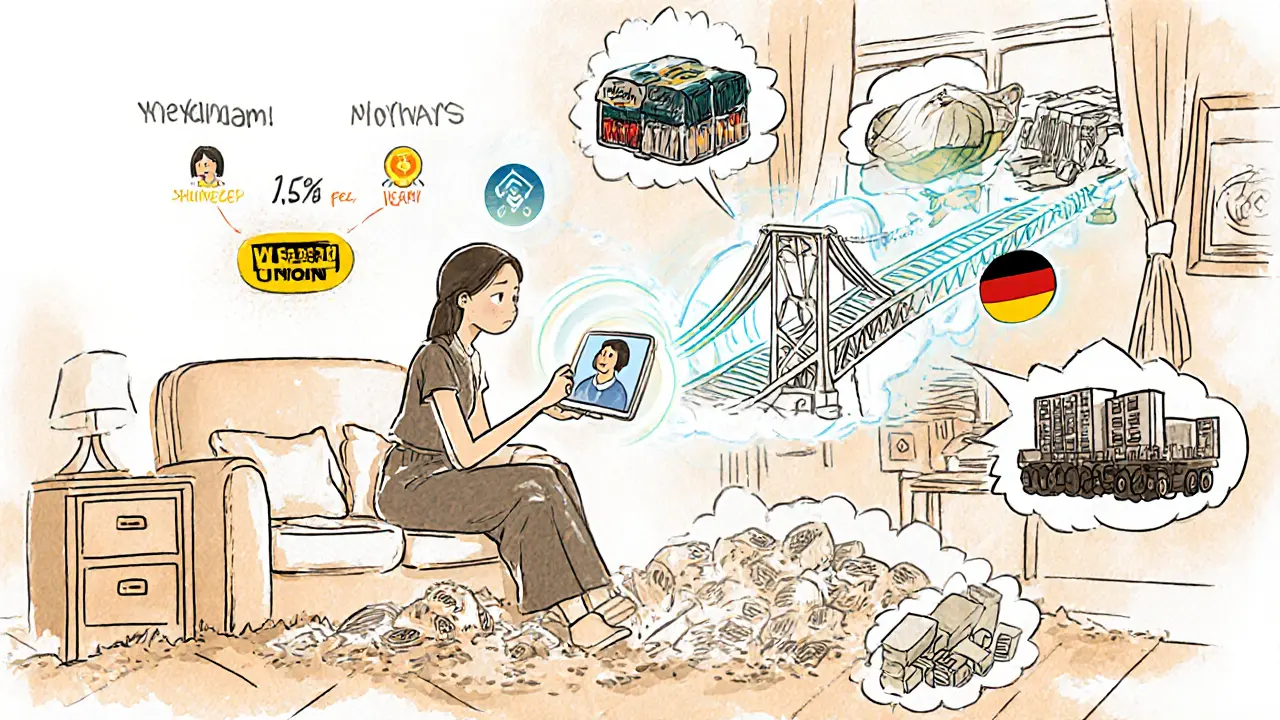
Vietnam sent $19.2 billion in remittances home in 2024. That’s money from overseas workers-nurses in Taiwan, factory workers in South Korea, engineers in Germany. Right now, they send it through Western Union or MoneyGram. Fees? Around 6.8%. Time? Three to five days.
If Vietnam allowed regulated stablecoins-digital tokens pegged to the U.S. dollar-those workers could send money in minutes for under 1.5%. That’s what’s happening in the Philippines, where GCash’s GCrypto platform has 8.7 million users. Vietnam could do the same. But the SBV banned it.
So what do Vietnamese users do? They buy USDT on Binance P2P. Then they trade it for VND. But because there’s no official bridge, the price is inflated. Users pay 3-5% extra just to convert their crypto into cash. That’s a hidden tax. And it’s why 68% of negative reviews on Binance Vietnam mention “high fees” and “complex KYC.”
Who’s Using Crypto in Vietnam-and Why
It’s not just speculators. It’s students, freelancers, small business owners, and parents sending money home.
According to a September 2025 survey of 5,000 users:
- 74% use crypto for cross-border remittances
- 41% use it to buy goods on Shopee Vietnam’s crypto payment pilot
- 68% are between 18 and 35 years old
- 54% have a university degree
- 59% earn between $568 and $1,514 per month
These aren’t hedge fund traders. They’re everyday people using crypto because it works better than the banking system. And they’re not asking for permission. They’re just doing it.
The Institutional Gap
Singapore has 49% institutional crypto adoption. Vietnam? 17%.
Why? Because big players-funds, banks, corporations-need legal clarity. They need stablecoins. They need to know their assets won’t be frozen next week. Vietnam’s current rules don’t offer that. Even though the country has over 427 blockchain startups and a $473 million government fund for digital transformation, none of the big institutions are stepping in.
Deloitte’s analysis found Singapore’s open framework leads to 32% higher institutional adoption than Vietnam’s. That’s not a small gap. It’s the difference between a vibrant ecosystem and a grassroots movement stuck in the shadows.
The Risk: A Financial Time Bomb
The International Monetary Fund warned in October 2025 that Vietnam’s unregulated crypto activity poses “significant financial integrity risks.” That’s a fancy way of saying: if something goes wrong, there’s no safety net.
There’s no deposit insurance on Binance P2P trades. No recourse if a seller disappears. No audit trail for tax authorities. And with 89% of users saying they’re worried about new restrictions, the fear is real. One wrong policy move-like suddenly banning P2P trading-could trigger a panic. People could rush to cash out. Prices could crash. Savings could vanish.
But the SBV isn’t blind to this. Deputy Governor Pham Thanh Ha says their goal is “financial stability while allowing innovation.” That’s a noble goal. But right now, innovation is happening anyway-just not where the government wants it.
What Could Change?
Two things might shift the balance in 2026:
- The digital đồng pilot-a central bank digital currency (CBDC) being tested with 20 banks-could eventually connect to crypto infrastructure. If it does, it could become a bridge between the official system and the underground market.
- The draft tax law (Circular 40) proposes a 2% VAT and 0.1% transaction tax on crypto. If it passes, it’s a signal: the government is ready to recognize crypto as real economic activity. That could open the door to more formal participation.
Morgan Stanley projects that if Vietnam allows regulated stablecoins and eases capital requirements, its crypto market could grow 25-30% annually through 2028. That could capture 12-15% of its $19.2 billion remittance market and $137 billion e-commerce sector.
But that’s only if the government stops treating crypto like a threat-and starts treating it like a tool.
The Bottom Line
Vietnam didn’t rank #6 because of its laws. It ranked #6 despite them. Its people are using crypto not because it’s trendy, but because it’s necessary. They’re bypassing bureaucracy, paying extra fees, and risking uncertainty-all for faster, cheaper, more reliable money transfers.
The question isn’t whether Vietnam will keep leading in crypto adoption. It already is.
The real question is: will the government catch up?
Why does Vietnam rank high in crypto adoption if crypto is restricted?
Vietnam ranks high because its people use crypto out of necessity-not choice. With slow banks, high remittance fees, and inflation concerns, millions turned to decentralized networks like Binance P2P to send money, buy goods, and store value. Even though the government bans stablecoins and imposes strict capital rules, demand is so strong that adoption thrives anyway-mostly outside the official system.
Can I legally trade crypto in Vietnam?
Yes, but only under strict conditions. You can buy and sell crypto using Vietnamese Dong (VND) through offshore platforms like Binance or Bybit. However, you can’t use local exchanges unless they’re licensed under the SBV’s 10-trillion-VND capital rule-which no company has met yet. Trading crypto for foreign currencies or issuing stablecoins is illegal. So while you can trade, you can’t do it easily or safely within Vietnam’s legal framework.
Why doesn’t Vietnam allow stablecoins?
The State Bank of Vietnam fears stablecoins could undermine the Vietnamese Dong, enable capital flight, or be used for money laundering. They also worry about banks losing control over monetary policy. So they banned fiat-backed stablecoins entirely. Only asset-backed tokens-like those tied to real goods-are allowed. But this makes crypto less useful for everyday transactions, especially remittances, where stablecoins would be ideal.
How much of Vietnam’s crypto activity is illegal?
Approximately 92% of crypto transactions in Vietnam happen outside the formal system-on offshore P2P platforms, through informal brokers, or via unlicensed wallets. The government’s regulatory sandbox has received zero applications, and no licensed crypto exchange currently operates. So while trading isn’t technically illegal, most of it happens in a legal gray zone.
Is Vietnam’s crypto market growing or shrinking?
It’s growing fast. Crypto transaction volume reached over $100 billion in 2025, up from $65 billion in 2024. Retail adoption is at 17.2% of the population-higher than Thailand or Indonesia. The number of blockchain startups rose 37% year-over-year. Growth is driven by demand, not policy. Unless the government changes course, adoption will keep rising, even if it stays underground.
What’s the biggest risk for Vietnamese crypto users?
The biggest risk is sudden regulatory crackdowns. With 89% of users expressing fear of new restrictions, a policy shift-like banning P2P trading or freezing offshore accounts-could cause mass panic. There’s no deposit insurance, no legal recourse, and no safety net. If the government suddenly cracks down, people could lose access to their funds overnight.
Eddy Lust
November 27, 2025 AT 19:16man. i just read this and thought about my cousin in ho chi minh city. she sends money to her mom every month using binance p2p. pays like 4% extra just to get vnd. no one talks about how exhausting this is. they’re not crypto bros. they’re just trying to feed their families. and the government acts like it’s a crime to be resourceful.
Casey Meehan
November 29, 2025 AT 00:37vietnam at #6?? 😳🤯 i mean, i knew they were wild with crypto but this is next level. no stablecoins? no foreign currency trading? bro they’re using crypto like it’s a hack in a video game. and the fact that 92% is off the books?? that’s not defiance. that’s innovation with a middle finger.
Tom MacDermott
November 30, 2025 AT 06:36oh wow. another ‘poor oppressed people of vietnam’ sob story. let me grab my violin. the state bank isn’t the villain here - the people using crypto to evade capital controls and launder money are. you call it ‘necessity.’ i call it financial anarchy. and you’re glorifying it like it’s some grassroots revolution. it’s not. it’s a regulatory failure waiting to explode.
Martin Doyle
November 30, 2025 AT 23:54you’re all missing the point. this isn’t about freedom or oppression. it’s about infrastructure. vietnam’s banking system is broken. the government’s solution? build a $2.8 million, 11-month approval wall? that’s not regulation. that’s sabotage. if you want real change, stop pretending crypto is a threat and start treating it like the utility it is.
Susan Dugan
December 2, 2025 AT 10:27ok but think about this - if the philippines can make stablecoins work for remittances with gcrypto, why can’t vietnam? they’ve got the tech, the youth, the demand. it’s not about fear of the dong collapsing. it’s about fear of losing control. and honestly? that’s not leadership. that’s ego wrapped in a policy document.
SARE Homes
December 3, 2025 AT 04:38Grace Zelda
December 4, 2025 AT 08:00what’s wild is that this isn’t about crypto at all. it’s about trust. vietnamese people don’t trust their banks. they don’t trust their currency. they don’t trust the state to protect their savings. so they built their own system. the government didn’t stop adoption. it just made it messy, expensive, and dangerous. that’s not a policy failure. that’s a moral one.
Sam Daily
December 6, 2025 AT 00:28bro. i work in fintech. i’ve seen this play out in 5 countries. when the system fails, people build alternatives. vietnam’s crypto scene isn’t a glitch. it’s a feature. the government’s sandbox? it’s a museum. no one’s applying because the rules were written by people who’ve never used a phone to send money. fix the system. don’t punish the people using it.
Kristi Malicsi
December 6, 2025 AT 18:24the digital đồng could be the bridge but they’re moving too slow. everyone’s just waiting for the other guy to move first. meanwhile the people keep trading. the system doesn’t need permission. it just needs time.
Rachel Thomas
December 7, 2025 AT 14:41Sierra Myers
December 9, 2025 AT 11:43the fact that zero companies applied to the sandbox says it all. even the big players know the game is rigged. you can’t regulate what people already do. you can only tax it. and if they’re gonna tax it, they should’ve just legalized it from the start.
SHIVA SHANKAR PAMUNDALAR
December 10, 2025 AT 19:37the real question is not whether vietnam will catch up. it’s whether the world will ever stop romanticizing chaos. people don’t use crypto because it’s smart. they use it because the system is broken. and when you romanticize broken systems, you don’t fix them. you just make the suffering prettier.