What Is Tyler (TYLER) Crypto? A Deep Dive Into the Red Toad Meme Coin on Base

You’ve probably heard of Dogecoin or Shiba Inu. Maybe you’ve even dabbled in newer meme coins like Pepe or Bonk. But have you heard of Tyler? It’s not a household name yet, and for good reason. Tyler (ticker: TYLER) is a micro-cap cryptocurrency that trades for fractions of a penny, with a market capitalization that barely cracks $20,000 USD. If you’re wondering whether this obscure token is a hidden gem or just another internet joke, you’re asking the right questions.
Tyler isn’t your typical anonymous meme coin. While it started as a community-driven project centered around a red toad mascot, it has pivoted toward offering actual utility through a marketing bot. This shift from pure speculation to service provision makes it an interesting case study in the evolving world of Layer-2 meme coins. However, its tiny size and lack of institutional backing mean it carries extreme risk. Let’s break down what Tyler actually is, how it works, and why you should tread carefully.
Key Takeaways
- Tyler (TYLER) is a meme token deployed on the Base Layer-2 network, featuring a red toad mascot.
- The total supply is fixed at 1,000,000,000 TYLER, with no insider pre-sales reported.
- Tyler generates revenue via a marketing bot that helps other coins trend on DexTools and DexScreener; fees are used to buy back and burn TYLER tokens.
- As of mid-2026, Tyler is a micro-cap asset with a market cap under $20,000 USD and extremely low trading volume.
- There is significant data discrepancy across platforms regarding which blockchain Tyler resides on, so verifying the contract address is critical.
What Exactly Is Tyler (TYLER)?
To understand Tyler, you first need to separate the signal from the noise. The primary version of Tyler tracked by major aggregators like CoinMarketCap and CoinGecko is an ERC-20 style token running on Base an Ethereum Layer-2 rollup network developed by Coinbase. Its branding is simple: a red toad. That’s it. There is no whitepaper detailing complex economic models, no named founding team, and no corporate entity behind it.
According to public listings, Tyler was launched as a "100% fair launch" project. This means there were no private sales, no venture capital allocations, and no reserved tokens for developers. In the crypto world, fair launches are often marketed as democratic, but they also mean there’s no one to call if things go wrong. The project relies entirely on community momentum.
Here’s where it gets tricky. While Base is the confirmed home for the main TYLER token, other platforms list different assets with the same ticker. For instance, CoinSwitch lists a TYLER coin on the Solana high-performance blockchain known for fast transactions blockchain. Crypto.com lists a version with a max supply of only 100 million tokens. These are likely separate projects or data errors, but they highlight a major risk: impersonation. Always verify the contract address. The legitimate Base-based Tyler contract starts with `0x65e5`.
From Meme to Utility: The Marketing Bot Model
If Tyler were just another frog or dog coin, it would fade into obscurity quickly. Instead, the project introduced a utility layer: a marketing bot. According to CoinGecko, this bot helps other cryptocurrency projects gain visibility by getting them to "trend" on popular tracking platforms like DexTools a platform for monitoring decentralized exchange activity and DexScreener a real-time charting tool for new crypto pairs.
Here’s how the economics work:
- Other small crypto projects pay Tyler’s bot to boost their trend metrics.
- The bot collects fees in stablecoins or ETH.
- A portion of these fees is automatically used to buy TYLER tokens from the open market.
- The purchased tokens are then burned (permanently removed from circulation).
This creates a deflationary mechanism. In theory, as more projects use the bot, the circulating supply of TYLER decreases, which could drive up the price per token. This is a clever twist on the standard meme coin model. It ties the value of TYLER to the broader ecosystem of micro-cap coins trying to get noticed. However, there’s a catch: we don’t know how many clients use the bot, what the fee structure is, or exactly what percentage of revenue goes to burns. Without transparency, it’s hard to assess if this utility is meaningful or just a marketing gimmick.

Tokenomics and Supply Details
Let’s look at the numbers. The core metric for any crypto is its supply. For the Base-network Tyler:
| Metric | Value |
|---|---|
| Total Supply | 1,000,000,000 TYLER |
| Max Supply | 1,000,000,000 TYLER |
| Circulating Supply | ~1,000,000,000 TYLER |
| Network | Base (Ethereum L2) |
| Inflationary? | No (Deflationary via burns) |
With a fixed supply of one billion tokens, there’s no risk of infinite printing. However, since the entire supply is reportedly in circulation, there’s no vesting schedule to worry about either. You’re buying into whatever is available right now. The deflationary burn mechanism is the only factor that changes the supply over time, and based on current trading volumes, those burns are likely negligible.
Market Performance: A Micro-Cap Reality Check
If you’re looking for life-changing returns, you need to understand the scale of Tyler. As of June 2026, Tyler is a quintessential micro-cap asset. Here’s the harsh reality of its market performance:
- All-Time High (ATH): Approximately $0.003685 USD, reached on November 23, 2024.
- Current Price: Hovering between $0.000018 and $0.000029 USD depending on the data source.
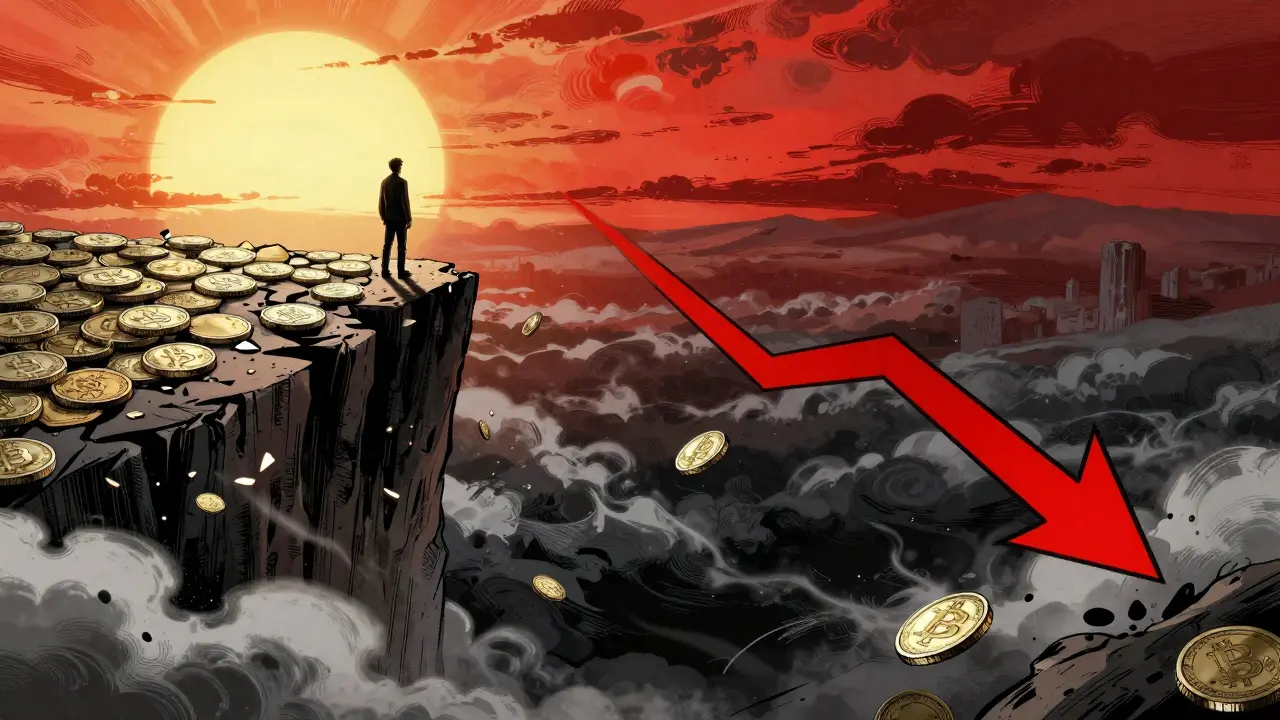
- Drawdown: The token is currently down roughly 99.5% from its peak.
- Market Cap: Under $20,000 USD.
- Daily Volume: Extremely low, ranging from $15 to $1,400 USD on its primary DEX pair.
Why does this matter? Liquidity. When daily volume is measured in hundreds of dollars, a single sell order of $500 can crash the price by 10% or more. You cannot trade Tyler like Bitcoin or even Ethereum. You are entering a thin market where slippage (the difference between expected price and executed price) will be high.
Data discrepancies further complicate things. CoinGecko might show a price of $0.000025, while Cryptohopper shows $0.000063. These differences aren’t just rounding errors; they reflect fragmented liquidity across different exchanges and delayed data feeds. LBank, a centralized exchange, lists TYLER but shows zero volatility, suggesting the listing is inactive or purely cosmetic.
Risks and Red Flags
Investing in Tyler requires acknowledging several serious risks. First, there is no identifiable team. No founders, no advisors, no company registration. This anonymity is common for meme coins but eliminates accountability. If the smart contract has a bug, or if the developers decide to abandon the project, there is no recourse.
Second, security audits are missing. Major DeFi protocols publish audit reports from firms like CertiK or OpenZeppelin. Tyler’s profiles on CoinMarketCap and CoinGecko do not mention any external audits. We don’t know if the contract ownership has been renounced (meaning devs can’t change the code) or if minting functions are locked. Without this information, you are trusting the code blindly.
Third, regulatory uncertainty. Tyler operates without any disclosed legal structure or compliance licenses. In the current regulatory climate, unregistered securities can face sudden delistings or legal challenges. While meme coins have largely flown under the radar, this landscape is shifting rapidly in 2026.
How to Trade Tyler Safely
If you decide to proceed despite the risks, here is how to navigate the technical side. Since Tyler primarily trades on decentralized exchanges (DEXs), you won’t find it on major platforms like Coinbase Pro or Binance for direct spot trading. Instead, you’ll need to use a Web3 wallet.
- Set up a Wallet: Use MetaMask or Coinbase Wallet. Ensure it supports the Base network.
- Add Base Network: Configure your wallet to connect to Base. You’ll need ETH to pay for gas fees on Base (which are very cheap compared to Ethereum Mainnet).
- Verify the Contract: Copy the exact contract address starting with `0x65e5...`. Do not trust links from social media; always cross-reference with CoinGecko or CoinMarketCap.
- Use Uniswap v3: Navigate to Uniswap on Base. Swap WETH for TYLER. Be aware of high slippage settings; you may need to set slippage tolerance to 5-10% to execute trades due to low liquidity.
- Check DexScreener: Before buying, check the live chart on DexScreener to see recent transaction history. If there are no buys in the last hour, the market might be dead.
Community and Social Sentiment
For a meme coin, community is everything. So, how active is the Tyler community? Data suggests it’s quite small. Coinbase social metrics indicate that only about 19 unique individuals discussed Tyler in a recent 24-hour period. Its global ranking in mentions is #3,354, placing it firmly in the long tail of crypto interest.
The sentiment score is mildly positive (3.6 out of 5), but with such a small sample size, this metric is statistically insignificant. There are no large Telegram groups, Discord servers, or Twitter followings reported in major aggregators. The "power of the community" slogan on CoinMarketCap seems aspirational rather than descriptive. Without a vocal holder base, the token lacks the viral momentum needed to drive price action independently of the bot utility.
Is Tyler a Good Investment?
Let’s be direct: Tyler is not an investment in the traditional sense. It is a speculative bet on a niche utility tool within the meme coin ecosystem. The potential upside exists only if the marketing bot gains widespread adoption among thousands of new meme projects, generating enough fees to significantly reduce the token supply and drive demand.
However, the downside is capped at 100% loss. Given the 99% drop from its all-time high, the path to recovery is steep. You would need massive inflows to reverse the bearish trend. Compare this to established Layer-2 tokens or blue-chip memes, which have deeper liquidity and clearer roadmaps. Tyler offers higher risk for potentially higher rewards, but the probability of success appears low based on current engagement metrics.
If you choose to buy, treat it as entertainment money-funds you are fully prepared to lose. Never allocate more than a tiny fraction of your portfolio to micro-caps like Tyler. Diversification remains your best defense against the volatility inherent in this sector.
What blockchain is Tyler (TYLER) built on?
The primary Tyler token is built on the Base network, which is an Ethereum Layer-2 solution. However, be cautious as other unrelated tokens with the same ticker exist on Solana and other chains. Always verify the contract address starting with 0x65e5.
Who created the Tyler crypto coin?
There is no publicly identified founding team, company, or individual creator for Tyler. It is positioned as a community-driven project with a "fair launch" model, meaning no insiders held initial allocations.
Does Tyler have any utility besides being a meme?
Yes, Tyler has developed a marketing bot that helps other cryptocurrencies trend on platforms like DexTools and DexScreener. Fees generated from this service are used to buy back and burn TYLER tokens, creating a deflationary mechanism.
Can I buy Tyler on Coinbase or Binance?
No, Tyler is not directly tradable on major centralized exchanges like Coinbase or Binance. It primarily trades on decentralized exchanges (DEXs) like Uniswap v3 on the Base network. Some smaller CEXs like LBank list it, but liquidity is often minimal.
What is the total supply of TYLER tokens?
The total and maximum supply of the Base-network Tyler token is 1,000,000,000 (one billion) TYLER. Note that some data sources may show conflicting supplies due to different token versions on other blockchains.
Is Tyler a safe investment?
Tyler is considered a high-risk, micro-cap asset. It lacks formal audits, has an anonymous team, and suffers from low liquidity. Investors should only allocate funds they can afford to lose entirely.